Congratulations to Ontario Power Generation (OPG), HOK, and the entire project team on OPG's Oshawa Headquarters being recognized as a 2026 Canadian Interiors 'Best of Canada' award winner.

Transforming the former GM Canada headquarters into a vibrant, future-focused workplace is an outstanding achievement. The project demonstrates how thoughtful interior design, adaptive reuse, and multidisciplinary collaboration can create spaces that support culture, sustainability, and long-term performance.

HH Angus is proud to have supported this project as the mechanical and electrical engineer, IMIT and lighting consultant, owner's engineer, plumbing/fire protection/life safety designer, and commissioning authority. Working alongside HOK and the broader design team, our role was to help create the building systems that support the vision for this exceptional workplace. The project was also recognized earlier this year with a 2026 Award of Distinction from the Association of Consulting Engineering Companies – Ontario Chapter, as well as an IES Toronto Section Award of Merit for lighting.

Congratulations again to Ontario Power Generation, HOK, and all the project partners on this well-deserved recognition.

To see all the winners, click here. 

To read more about the project, click here


At HH Angus, research is not an end in itself—it is a way to solve real-world challenges for building owners and operators.

By partnering with academic institutions and industry organizations, we are helping develop new approaches to understanding building performance, optimizing operations, and improving the long-term value of building assets. These initiatives allow us to explore emerging technologies before they become commercially available, while ensuring the work remains grounded in practical applications that benefit our clients.

The result is a collaborative process in which researchers develop innovative tools and methodologies, while HH Angus helps identify practical applications and connects those solutions to client needs.

These initiatives also help us build new capabilities and expertise that can be applied to future projects, creating long-term value for clients.

Partnering with TMU to Optimize Building Performance

One of HH Angus' current research partnerships is with Toronto Metropolitan University (TMU), where researchers are exploring new ways to model and optimize building systems using operational data.

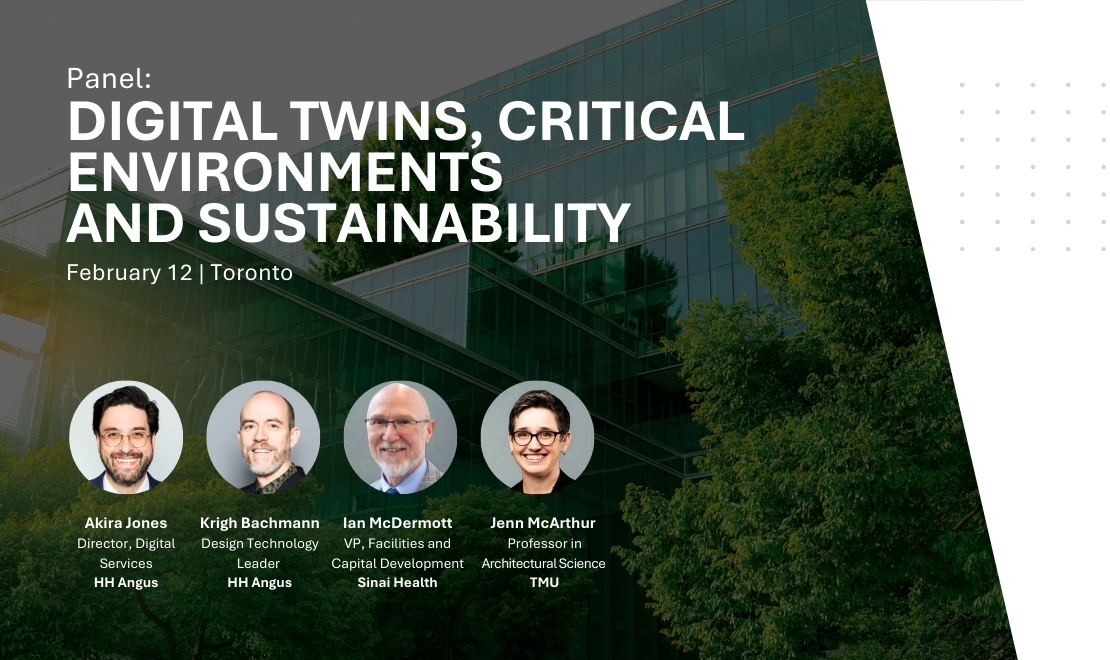
The project focuses on creating digital twins—virtual models that replicate the behaviour of real hospital building systems. Using available building data, these digital twins can simulate how systems perform under different operating conditions and test optimization strategies before any changes are made in the field.

The research is focused on central plant systems, particularly chillers and boilers, which are among the largest energy consumers in healthcare facilities. Even small improvements in how these systems operate can have a significant impact on energy consumption and operating costs.

The project is progressing through several stages, beginning with the development of digital twins, followed by testing optimization strategies within those virtual environments. Recommendations are then validated in real facilities, with the long-term goal of creating a scalable platform that can help generate optimization recommendations more efficiently.

Helping Clients Optimize Faster and with Greater Confidence

For building owners, one of the greatest challenges is determining how to improve performance without introducing operational risk.

In healthcare environments, for example, facility operators must prioritize reliability above all else. Critical systems support patient care and must operate continuously, often leaving little room to experiment with new approaches.

Digital twin technology helps address this challenge by allowing proposed changes to be tested virtually before they are implemented in a live environment. Operators can evaluate potential impacts, validate assumptions, and gain confidence in the expected outcomes before making adjustments to building systems.

Another important advantage is the ability to work with incomplete information. Traditional modeling approaches often require detailed data that may not be available in existing facilities. The research being conducted with TMU is exploring ways to model system performance using the data that is already available, helping accelerate the path to optimization.

Ultimately, the goal is to help clients improve building performance more quickly and efficiently while reducing uncertainty.

Building on a Strong Operational Foundation

The research also reinforces an important lesson about optimizing existing facilities: advanced technologies are most effective when built on a strong operational foundation.

Retro commissioning often provides one of the greatest opportunities to improve building performance by identifying gaps between a system's original design intent and its current operation. Over time, facilities evolve, operational requirements change, and systems may no longer perform as intended.

By first ensuring that systems are operating properly, building owners can establish a solid baseline for improvement. Technologies such as digital twins and machine-learning-based optimization can then build on that foundation, helping owners achieve additional gains in efficiency, performance, and reliability.

Supporting Decarbonization and Asset Performance

While energy savings are a key outcome of the research, the benefits extend beyond utility costs.

Reducing energy consumption directly supports decarbonization objectives and can help organizations advance their sustainability goals. Optimized operations can also improve resiliency by enabling facilities to get more value from existing infrastructure while maintaining reliable performance.

The technologies being developed also have potential applications in predictive maintenance. By using operational data to identify performance issues and detect anomalies earlier, building owners can move toward more proactive maintenance strategies that improve reliability and support long-term asset management.

Creating a Feedback Loop for Better Design

The value of this work extends beyond existing facilities.

One of the long-standing challenges in the building industry is understanding how facilities actually perform once they are occupied and operating. Research initiatives such as the TMU partnership create an important feedback loop, providing insights that can inform future designs and improve how building systems are engineered.

By combining academic research, operational data, and practical industry experience, HH Angus is helping create smarter approaches to building performance—approaches that benefit both today's facilities and future buildings.

Looking Ahead

As digital twin technology, advanced analytics, and machine learning continue to evolve, opportunities to improve building performance will continue to expand.

Through partnerships with organizations such as TMU, HH Angus is helping bring these innovations from the research environment into real buildings, where they can deliver measurable value. The result is a stronger ability to help clients reduce energy consumption, improve operational performance, optimize assets, and make more informed decisions about the future of their facilities.


Akira Jones, P.Eng., LEED AP
Director, Digital Services


How can energy models better reflect the uncertainty of the real world?

Join HH Angus’ Francisco Contreras July 7 at the Canada Building Energy Modellers Networking Event as he presents:

“Accounting for Real-World Uncertainty in Whole-Building Energy Modelling”

Energy models play a critical role in informing building design and performance decisions, but real-world conditions rarely behave exactly as predicted. Francisco explores approaches to incorporating uncertainty into whole-building energy modelling to support more resilient, informed decision-making.

Whether you're an experienced energy modeller or new to the field, this is a great opportunity to expand your network and stay current on emerging trends and best practices.

For more event details and to register, click below:
https://www.eventbrite.ca/e/canada-building-energy-modellers-networking-event-toronto-july-2026-tickets-1991641216492


Progress in the green building sector doesn't happen in isolation. It's driven by collaboration, innovation, and the sharing of ideas and experiences across our industry.

From June 17 - 19, Montréal will become a hub for conversations about the future of sustainable buildings as industry leaders from across Canada gather for Building Lasting Change, the Canada Green Building Council’s annual conference.

As a CaGBC member and proud sponsor of this year’s event, HH Angus is looking forward to furthering discussions that are helping shape a more sustainable, resilient, and low-carbon built environment.

Chris Piche, Genevieve Rochette, Phil Schuyler and Abdel Ayad are looking forward to connecting with other experts who are as passionate about sustainability as we are, exchanging insights, and continuing the conversations that help create healthier, higher-performing buildings and communities across the country.

Building Lasting Change provides an important opportunity to bring those perspectives together, explore emerging solutions, and accelerate progress toward meeting Canada’s sustainability goals.


Henry Yao and Tenzin Blair from our Science & Technology team took part in the recent Finning Data Centre Conference in Calgary, where industry leaders discussed the accelerating demand for AI infrastructure, power generation, grid readiness, and the opportunity ahead for Alberta and Canada.

Here are their top 10 takeaways for clients planning, developing, or operating data centres:

𝟭. 𝗔𝗜 𝗶𝘀 𝗿𝗲𝘀𝗵𝗮𝗽𝗶𝗻𝗴 𝘁𝗵𝗲 𝗱𝗮𝘁𝗮 𝗰𝗲𝗻𝘁𝗿𝗲 𝗹𝗮𝗻𝗱𝘀𝗰𝗮𝗽𝗲
AI data centres are creating one of the steepest CAPEX curves in modern history. Organizations that have focused on maximizing access to computing power are gaining a performance advantage, while others face growing bottlenecks.

𝟮. 𝗘𝗻𝗲𝗿𝗴𝘆 𝘀𝗼𝘃𝗲𝗿𝗲𝗶𝗴𝗻𝘁𝘆 𝗶𝘀 𝗮 𝘀𝘁𝗿𝗮𝘁𝗲𝗴𝗶𝗰 𝗮𝗱𝘃𝗮𝗻𝘁𝗮𝗴𝗲
Canada has significant natural resources and ranks highly for energy sovereignty but unlocking that advantage will require faster alignment across utilities, regulators, municipalities, and developers.

𝟯. 𝗔𝗹𝗯𝗲𝗿𝘁𝗮 𝗵𝗮𝘀 𝗲𝗻𝗼𝗿𝗺𝗼𝘂𝘀 𝗱𝗮𝘁𝗮 𝗰𝗲𝗻𝘁𝗿𝗲 𝗽𝗼𝘁𝗲𝗻𝘁𝗶𝗮𝗹
Conference discussions referenced more than 20GW of requested data centre connections in Alberta, with demand far exceeding current available capacity. This represents a major opportunity for economic diversification, tax base expansion, and generational growth.

𝟰. 𝗚𝗿𝗶𝗱 𝗰𝗮𝗽𝗮𝗰𝗶𝘁𝘆 𝗶𝘀 𝗼𝗻𝗲 𝗼𝗳 𝘁𝗵𝗲 𝗱𝗲𝗳𝗶𝗻𝗶𝗻𝗴 𝗰𝗵𝗮𝗹𝗹𝗲𝗻𝗴𝗲𝘀
The pace of data centre demand is outstripping the pace of infrastructure development. Current permitting, land rights, approvals, and public consultation pathways remain lengthy and complex.

𝟱. 𝗕𝗲𝗵𝗶𝗻𝗱-𝘁𝗵𝗲-𝗺𝗲𝘁𝗲𝗿 𝗽𝗼𝘄𝗲𝗿 𝗶𝘀 𝗴𝗮𝗶𝗻𝗶𝗻𝗴 𝗮𝘁𝘁𝗲𝗻𝘁𝗶𝗼𝗻
Panelists noted that behind-the-meter configurations can offer significantly higher efficiency than traditional grid delivery models, making them an important, and in many cases mandatory, consideration for future data centre developments.

𝟲. 𝗔𝗜 𝗹𝗼𝗮𝗱𝘀 𝗮𝗿𝗲 𝗺𝗼𝗿𝗲 𝗱𝘆𝗻𝗮𝗺𝗶𝗰 𝘁𝗵𝗮𝗻 𝗰𝗹𝗼𝘂𝗱 𝗹𝗼𝗮𝗱𝘀
Compared with traditional cloud data centres, AI facilities can experience much greater transient load swings. This changes the engineering conversation around gas generation, diesel standby, BESS, and overall system resilience.

𝟳. 𝗕𝗘𝗦𝗦 𝘄𝗶𝗹𝗹 𝗽𝗹𝗮𝘆 𝗮 𝗸𝗲𝘆 𝗿𝗼𝗹𝗲 𝗶𝗻 𝗳𝗮𝘀𝘁 𝗿𝗲𝘀𝗽𝗼𝗻𝘀𝗲
Battery energy storage systems are becoming increasingly important for managing rapid load changes and supporting reliability, especially where AI workloads create more volatile demand profiles.

𝟴. 𝗙𝘂𝗲𝗹 𝘀𝘁𝗿𝗮𝘁𝗲𝗴𝘆 𝗺𝗮𝘁𝘁𝗲𝗿𝘀
Gas, diesel, BESS, and hybrid solutions each have advantages and limitations. For AI data centres, fluctuating loads can create challenges for gas generation, while diesel can offer operational advantages in certain standby or transitional scenarios.

𝟵. 𝗖𝗼𝗼𝗹𝗶𝗻𝗴 𝘀𝘁𝗿𝗮𝘁𝗲𝗴𝗶𝗲𝘀 𝗮𝗿𝗲 𝗲𝘃𝗼𝗹𝘃𝗶𝗻𝗴 𝗾𝘂𝗶𝗰𝗸𝗹𝘆
Liquid cooling, direct-to-chip solutions, and closed-loop water strategies are expected to become increasingly central as AI compute densities continue to rise.

𝟭𝟬. 𝗔 𝗵𝗼𝗹𝗶𝘀𝘁𝗶𝗰 𝗲𝗻𝗲𝗿𝗴𝘆 𝗿𝗼𝗮𝗱𝗺𝗮𝗽 𝗶𝘀 𝗲𝘀𝘀𝗲𝗻𝘁𝗶𝗮𝗹
Successful data centre development will require more than power availability. It will demand integrated planning across generation, distribution, emissions reduction, approvals, cooling, resiliency, operations, and long-term scalability.


The overarching message was clear: data centre growth is accelerating, but infrastructure, regulation, and energy strategy must move just as quickly.

At HH Angus, we help clients navigate this complexity through integrated engineering solutions for data centres, including power, cooling, resilience, decarbonization, and operational performance.

To learn more about our energy solutions and advisory services for mission critical environments, contact Nick Mons.