Sector: Institutional/Public Sector
Infrastructure Ontario
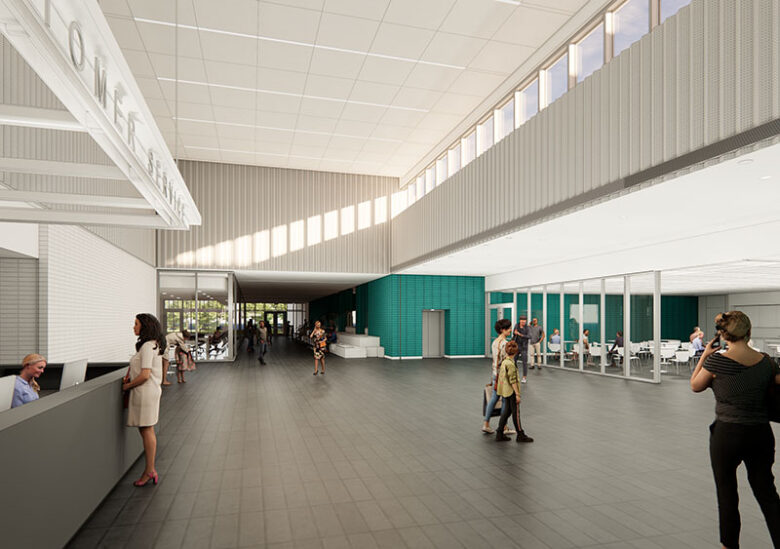
MECP-MLITSD Science Facility Complex
The new complex will bring together existing operations into a single, modern, science and laboratory facility that will strengthen capacity to deliver on critical mandates of protecting the environment, public health, and safety.
The new Science Facility Complex will permanently replace Ontario's Ministry of the Environment, Conservation and Parks’ (MECP) facility at 125 Resources Road and Ministry of Labour, Immigration, Training and Skills Development’s (MLITSD) temporary facility at 6295 Northam Drive (formerly at 81A Resources Road).
HH Angus’ Science and Technology team is providing compliance (PDC) engineering services for this Design-Build-Finance-Maintain (DBFM) infrastructure project that will protect public health and the environment through advanced monitoring of radiological materials, environmental contaminants, and live viruses. The new facility will have purpose-built, flexible design to allow for adaptable laboratories, science workshop spaces, and offices to support both current operations and future growth.
SERVICES
Mechanical Compliance Engineering | Electrical Compliance Engineering | ICAT Compliance Engineering
PROJECT FEATURES
P3-DBFM | Targeting LEED Silver certification | Flexible and adaptable laboratory and office spaces | Status: Ongoing
LOCATION
Oakville, Ontario
Government of Canada
Sir John A. Macdonald Building
“The Government of Canada recognized that rehabilitation of the Macdonald Building would support the federal agenda to incorporate innovative, sustainable and environmentally responsible design into all of their buildings.”
PWGSC website
The Macdonald Building in Ottawa was undergoing extensive renovation and upgrades to its structure and systems, most of which were original to the 1930s construction and fell short of modern building codes. Key elements of the redevelopment included improvements in energy efficiency, long-term durability, indoor air quality and other measures. Heritage conservation was also a key consideration of the upgrades, with the objective of improving long term operational results and building integrity.
Engaged as the vertical transportation consultant, HH Angus executed a complex adaptive rehabilitation of the elevator space in the Macdonald Building to meet modern accessibility standards and building codes.
The majority of inter-floor movement is intended to be accommodated by stairways, with the single passenger elevator configured to ensure barrier-free access to occupied floors. This same elevator was configured to accommodate a stretcher (measuring up to 610 mm wide x 2010 mm long) in the prone position.
Two service elevators were provided to address all material handling requirements for the facility, providing a vertical connection from the new loading dock, which was part of the redevelopment. The service elevators are located adjacent to each other and, as such, provide service redundancy for the facility in the event that one elevator is not available.
The single LU/LA* features access restrictions to ensure that use of this elevating device is limited to staff, appreciating that there may be an occasional need for public use (under the direct supervision of staff) in cases where the passenger elevator is not available.
*Limited Use/Limited Application – a specialized type of elevator designed for commercial accessibility
SERVICES
Vertical Transportation Consultant
PROJECT FEATURES
Complex adaptive rehabilitation of office space | Completed 2015
LOCATION
Ottawa, Ontario
KEY SCOPE ELEMENTS
Renovation project | 1 passenger elevator, 1 LU/LA elevator, 2 service elevators providing redundant capacity
Government of Canada
G20 Summit RCMP Installation
When the 2010 G20 Summit unexpectedly relocated from Huntsville, ON to Toronto on very short notice, preparations instantly went into overdrive. The Summit represented at that time, the largest and most expensive security operation in Canada. All work, from blank page to final installation, was completed in just three weeks, as a result of the change of venue.
HH Angus was engaged under complete secrecy to provide mechanical, electrical and complex communications design to the RCMP G20 offices at the Toronto Dominion Centre, reworking existing conditions on two floors to meet the very tight schedule. The complexity of the installation and the accelerated timeline for the design/build required a high degree of collaboration with the client, the interior designer and the contractor.
The design/build project called for fibre optic service to be routed to 28 workstations, complete with highly secure fiber optics backbone cables on two floors for security monitoring. At the same time, we completed design and installation of over 1300 CAT6 UTP data cables for 420 workstations. Some workstations were serviced with as many as 12 strands of fibre optic cable. A total of more than 300 strands of fiber optic cable were installed to the desks. Tamper-proof conduit was only one of the specialized features implemented to deliver the security levels required for the operational aspect of the location.
Although the installation was temporary, it had to be built as if it was permanent. While the mechanical and electrical work was relatively straightforward, the communications installation was highly complex and ultra secure, in addition to being completely confidential. In the entire company, only three people at HH Angus knew the work being done was for the G20 Summit.
SERVICES
Mechanical Engineering | Electrical Engineering | Communications Design
PROJECT FEATURES
Accelerated delivery schedule | Complex installation | 44,000 ft2 | Completed 2010
LOCATION
Toronto, Ontario
KEY SCOPE ELEMENTS
Extraordinary degree of coordination required | Highly collaborative approach | 420 workstations serviced with over 1300 CAT6 UTP data cables, and 28 workstations serviced with highly secure fibre optics for security monitoring
City of Toronto
Nathan Phillips Square Spirit Garden
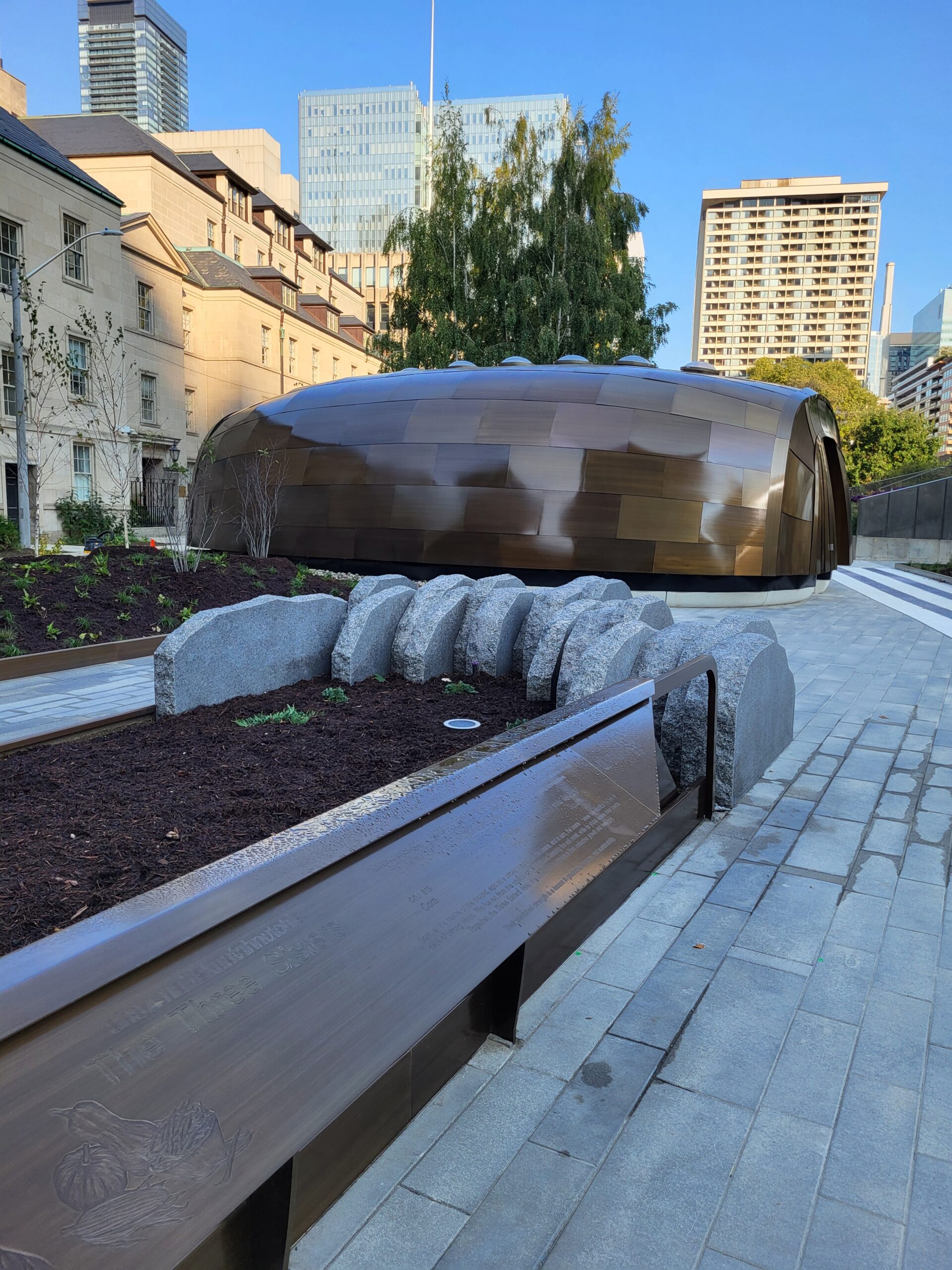
The Spirit Garden in Nathan Phillips Square — recipient of the 2025 Canadian Wood Council Wood Design & Building Award, as well as an Award of Excellence from the Toronto Urban Design Awards — is part of the City’s revitalization of its landmark civic space at New City Hall. As part of the improvements, a new Teaching, Learning, Sharing, and Healing space was designed and constructed to recognize and honour the experience of Indian Residential School Survivors.
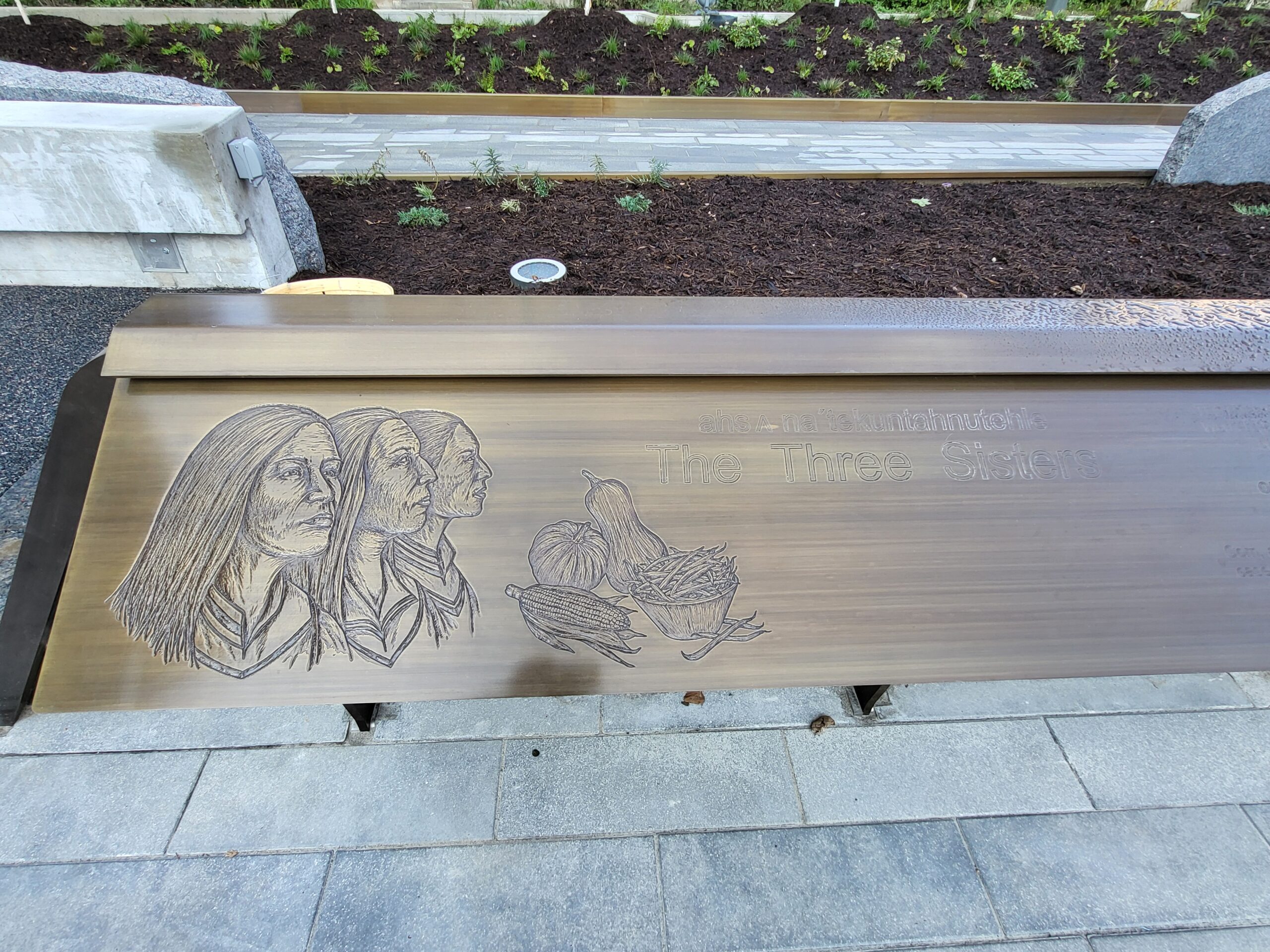
The Nathan Phillips Square Spirit Garden responds to the Truth and Reconciliation Commission’s ‘Call to Action 82’, establishing a permanent monument in Canada’s largest city. Spanning 20,650 ft2, this living memorial honours Indian Residential School Survivors and the children who never returned home, creating a powerful civic space for education, reflection, and healing. The project integrates Indigenous knowledge, ceremony, and storytelling into a new Teaching, Learning, Sharing, and Healing space, signifying Toronto’s ongoing commitment to reconciliation.
HH Angus played a central technical role in the cultural and contemplative space, providing mechanical and electrical engineering, security systems consulting, IMIT design, and commissioning. The project included new landscaping, a water feature, a major public artwork installation, and a new Teaching, Learning, Sharing, and Healing space.
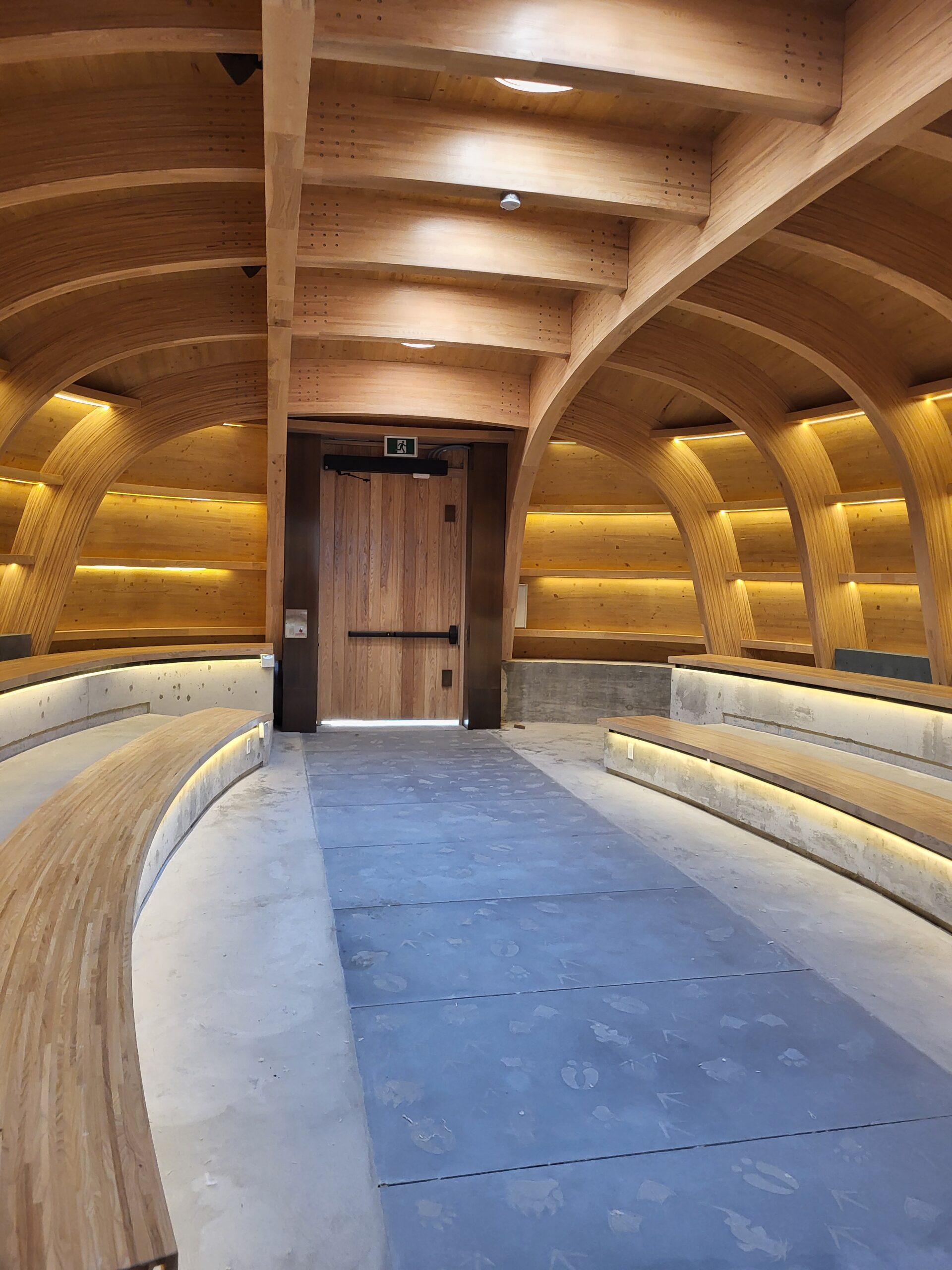
Our scope also included a full technical audit and inventory report to document all infrastructure and equipment impacted by the project; power supply for new landscape and other LED lighting fixtures; connection of new area drainage to existing storm systems in the parking level; mechanical and electrical services for the new 450 ft2 Teaching Lodge; and design of security systems for public spaces and the Teaching Lodge.
The exposed wood structure of the Teaching Lodge required exceptionally close coordination between the structural consultant and our mechanical and electrical teams, as service penetrations could not be modified after fabrication. The Teaching Lodge uses pre-formed laminated ash glulam timber and laminated spruce sheathing, both sustainably sourced, to create a resilient and expressive structure.
HH Angus also developed and prepared a commissioning plan for all mechanical and electrical equipment being installed during the project.
One of the interesting challenges of this project was working with multiple interested parties to ensure the collaborative vision of all rights holders for the project was achieved.
The Spirit Garden was delivered through sustained and respectful collaboration with Indigenous communities, ensuring that cultural heritage, traditional knowledge, and lived experience were central to the project’s design and execution. Indigenous Elders, Knowledge Keepers, artists, and community representatives were engaged by the City of Toronto and the design team throughout the planning and design process to guide the project’s cultural vision, symbolism, and spatial organization.
SERVICES
Mechanical Engineering | Electrical Engineering | IMIT design | Security Design | Commissioning
PROJECT FEATURES
Heritage site | Teaching lodge | New landscaping | Surface and parking improvements | Upgraded existing exterior infrastructure
LOCATION
Toronto, Ontario
KEY SCOPE ELEMENTS
Technical audit | Inventory Report | Power supply | Connection to drainage area in underground parking level | M&E services for new teaching lodge | Security systems design
City of Mississauga
Burnhamthorpe Community Centre Renovation and Expansion
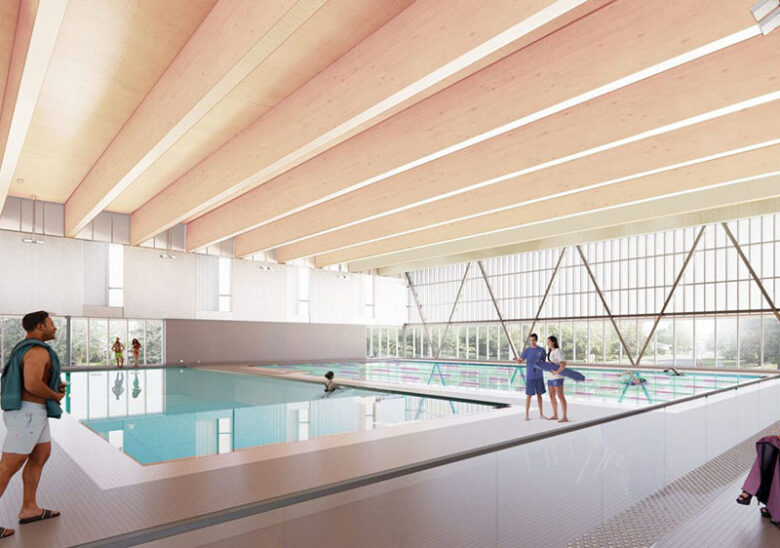
The Community Centre features a state-of-the-art aquatic centre as well as an equipment-based fitness centre. This is the first project designed and built to Mississauga's corporate Green Building standard. The project has also achieved Level 1 CGBS and incorporates net zero and passive house principles, a high-performance building envelope, triple glazing, and a green roof.
HH Angus played a key role in this project, providing mechanical and electrical engineering services, as well as security, IMIT, lighting, AV, and plumbing design. The addition includes a new 25-metre, 6-lane pool, therapeutic pool, fitness centre, and common areas, for a total of 43,000 ft2 of added amenities.
Renovations to the existing community centre encompass improvements across 65,000 ft2, repurposing and relocating multi-purpose program spaces, gymnasium, indoor arena, and upgrading facilities to meet accessibility and green development standards. Despite challenges posed in connecting to the existing building, the addition was situated on the northeast corner, utilizing space from the adjacent park.
To see more renovations, click here
SERVICES
Mechanical Engineering | Electrical Engineering | Plumbing Design | Lighting Design | Audio-Visual Design | Security Design | IMIT Design
PROJECT FEATURES
Green facility design to LEED Silver standard | State-of-the-art aquatic centre | Equipment-based fitness centre | Status: Completed 2024
LOCATION
Mississauga, Ontario
KEY SCOPE ELEMENTS
Project built to Mississauga's Green Building standard | Achieved Level 1 CGBC | Addition connected to existing recreation centre | Renovations and upgrades to existing building
All images courtesy of CS&P Architects