
Service: Electrical Engineering
Royal Jubilee Hospital
Patient Care Centre
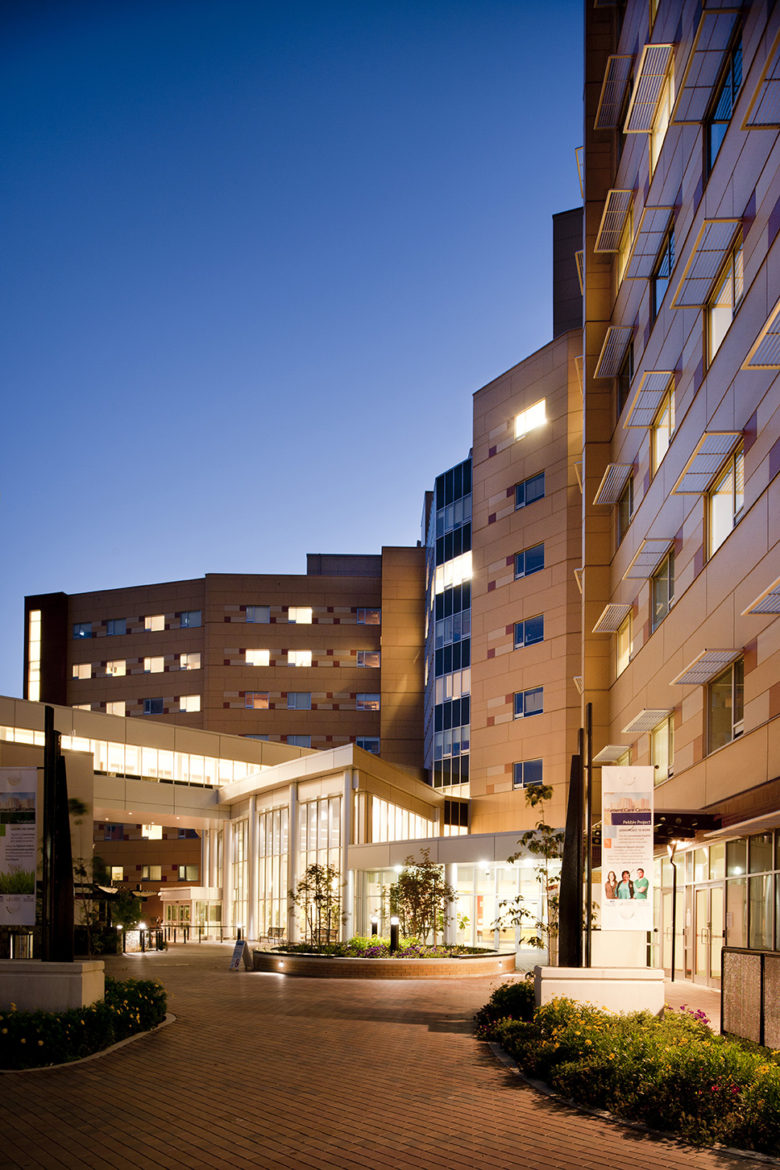
HH Angus provided consulting engineering for all mechanical, electrical, vertical transportation, IMIT and commissioning services for this state-of-the-art 400,000 ft2, 500-bed acute care and psychiatric facility. The facility was certified LEED® Gold, delivering a high performance building that is both sustainable and green. Innovations include rainwater harvesting, 100% fresh air with heat recovery and user-controlled environment.
Most floors in the 8-storey building have a common floor plan, each accommodating two units of 36 beds. Eighty-three are psychiatric beds designed to be converted to acute care if required. The building also includes a highly secure forensic assessment unit. Our vertical transportation work included four passenger elevators and six service elevators.
The site features a smudging room, the ‘All Nations Healing Room’. Mechanically, the room was designed with a dedicated exhaust system to extract smoke and odours during Sweet Grass and Smudging ceremonies, in addition to regular room ventilation.
Working with the rest of the design/build team, HH Angus evaluated the existing central heating plant, determining it was feasible to entirely delete an anticipated boiler/chiller plant. This significantly reduced plant size and cost while improving site-wide energy efficiencies, operating flexibility and redundancy provisions. Lighting installations included the latest LED technology, with excellent results.
IMIT
The Patient Care Centre was British Columbia’s first truly digital hospital. With end-to-end IP-based network infrastructure, caregivers and patients are connected more reliably and securely than had previously been possible. Our design included real-time patient and equipment tracking, auto call up of patient records when staff enter a patient room, and integration of patient records onto TV sets...just some of the digital advances in patient care.
The communications systems feature reliable operation, flexibility, quality of service, convenience, and efficiency of operations. A broad variety of communications, monitoring and computer systems have been installed; for example:
- An intelligent wireless system provides support for wireless applications inside the facility and are strategically positioned to provide full coverage. To ensure reliability and uniform coverage to the entire facility, the Intelligent Wireless Access Points automatically adjust RF signal levels. The system provides full roaming.
- A wireless network infrastructure supports numerous security schemes simultaneously. Data Encryption, Secure Mobility Device and User Authentication are supported, keeping traffic private in a mobile environment.
- The security systems utilize a fully Integrated Multimedia Security Management System (IMSMS), providing a scalable, open architecture, client server-based security management solution, ideal for healthcare facilities. The Security Management System integrates the CCTV, Access Control, Intrusion Detection, Panic/Staff duress, Patient Wandering and Incident Reporting System. The IMSMS workstations allow security personnel to monitor and control all security sub-systems from a single user interface.
SERVICES
Mechanical Engineering | Electrical Engineering | Security Design | IMIT Engineering | Vertical Transportation Consulting | Lighting Design
PROJECT FEATURES
Size: 400,000 ft2 | Status: Completed 2010
LOCATION
Victoria, British Columbia
KEY SCOPE ELEMENTS
BC’s first digital hospital with end-to-end IP-based network infrastructure | Smudging room with dedicated exhaust system | Rainwater harvesting | LEED® Gold Certified | 4 passenger and 6 service elevators | Met aggressive schedule for concurrent design and construction
Working to tight timelines
This P3 project had an aggressive schedule for concurrent design and construction, calling on HH Angus’ project management expertise to achieve all milestones and deliver the industry-leading facility to Royal Jubilee Hospital on time and within budget.
Commissioning
HH Angus also provided Commissioning Authority oversight. The commissioning plan is in accordance with the CSA Standard Z318.0-05 – Commissioning of Health Care Facilities.
HH Angus developed and helped to administer the Mechanical and Electrical Commissioning plan for MEP with partner firm HWT. The combined team provided stringent third party commissioning and testing services, including a well-defined equipment start-up procedure, verification of physical installation to general conformance with contract documents, and validation of system performance.
Training operations staff
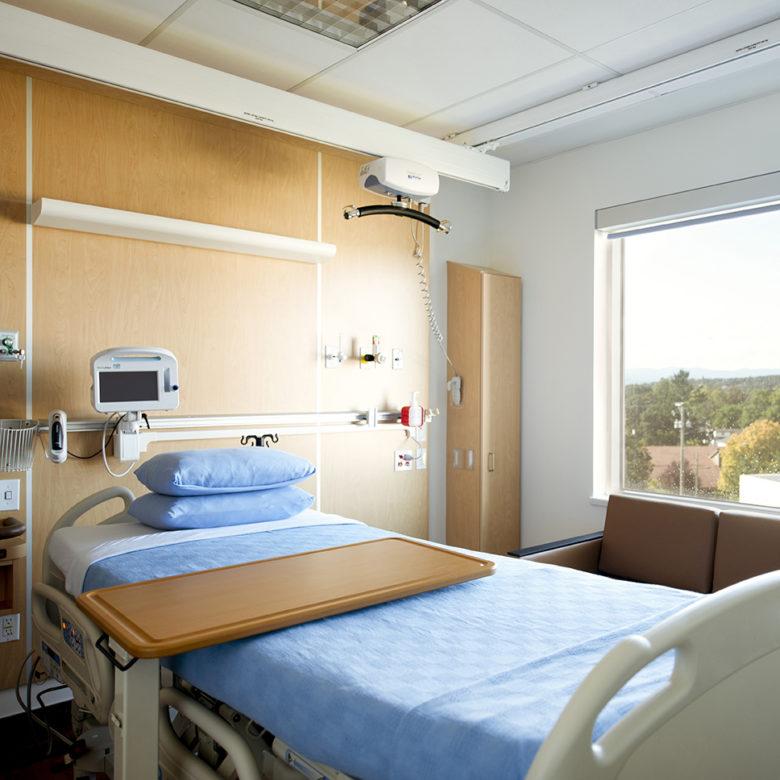
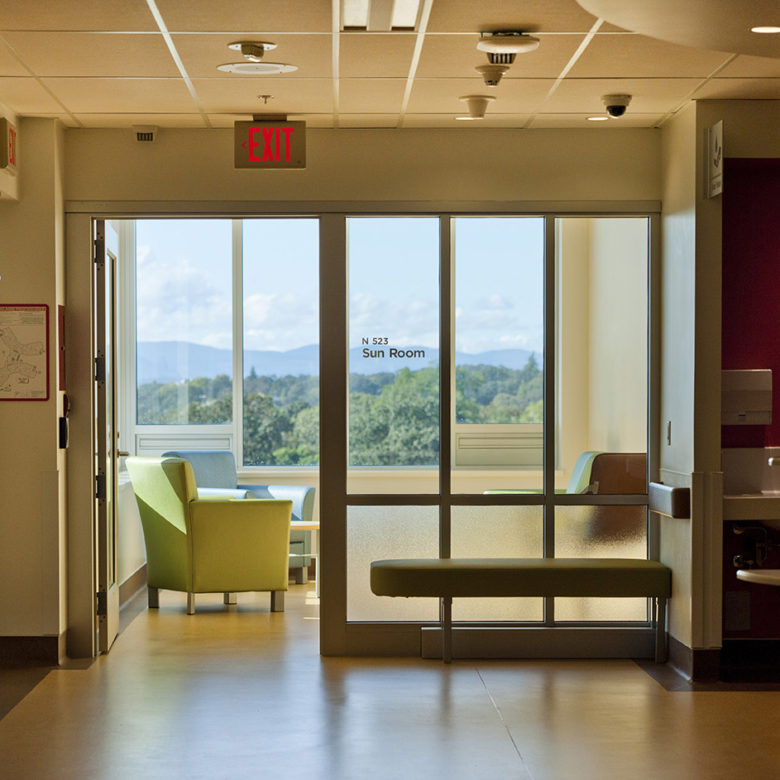
HH Angus developed comprehensive System Operating Manuals (SOMs) for each system and provided enhanced training to building operators on both equipment and the integrated systems, in order to reduce learning-curve time and minimize life cycle cost of the installation.
Queen’s University
Tindall Playing Field Relocation & Parking Structure
“The opening of Tindall Field is the first step for Queen's Athletics in moving towards our vision of becoming the best in Canada.”
– Leslie Dal Cin, Director of Athletics and Recreation, Queen’s News Centre Sept. 2008
Kingston, Ontario’s first outdoor artificial playing surface, Tindall Field at Queen’s University, was developed as a two-level underground parking structure and a running track and Soccer/Football Playing Field. The roof of the parking structure forms the base of the playing field, and includes a playing field storm drainage system that directs the storm water to a large cistern for flow control into the municipality’s storm drainage system. The field is surrounded by a 3-lane rubberized track.
Resolving light pollution issues was critical, given the proximity of the field to a student residence and the campus observatory. Lighting consisted of pole-mounted luminaires on each side of the playing field. The light distribution was controlled by designing shields for the upward lighting component and reflectors with cut-offs to reduce light distribution at the edge of the playing field.
SERVICES
Mechanical Engineering | Electrical Engineering | Lighting
PROJECT FEATURES
Status: Completed 2008
LOCATION
Kingston, Ontario
KEY SCOPE ELEMENTS
Playing field over underground parking | Rubberized running track | Storm drainage system with large cistern for flow control |Specialized light distribution control
Government of Bermuda
Bermuda Magistrate’s Courthouse & Hamilton Police Station
This 128,000 ft2 facility for the island nation of Bermuda includes five courtrooms, police facilities, an underground parking garage, detention cells suitable for overnight and weekend accommodations, a sally port, staff change and locker facilities, offices for court and police staff, and interview facilities.
HH Angus’ scope included mechanical and electrical engineering, IMIT, and AV design. The building is equipped with air conditioning and water retention tanks and is fully sprinklered. Water tanks collect rain water for both potable and fire protection requirements. Cooling equipment consists of air-cooled condensers and indoor compressors to minimize the exposure of equipment to the corrosive effects of salt-laden sea air.
The electrical scope included a high voltage power service, emergency power generator and corresponding dual distribution systems. Selected lighting, equipment and duplex receptacles were connected to emergency power.
The fire alarm system has dual annunciators. Smoke detectors were provided for each individual cell and located to avoid potential vandalism. Detectors were individually addressable in order to rapidly locate individual detectors triggering an alarm.
Fully-integrated closed circuit television, card access and door security monitoring systems were designed. The structured cabling system was a single mixed-media network to all information traffic - voice, video and data.
The latest audio visual technology was installed in the courtrooms: active sound reinforcement system, video system for the presentation of evidence, paging system for the judges, videoconferencing system for remote testimony and deposition, and digital recording system for proceedings recording. In addition there are dedicated elevators for prisoner transfer and additional retention cells adjacent to courtrooms.
SERVICES
Mechanical Engineering | Electrical Engineering | IMIT Design | Security and Communications Design
PROJECT FEATURES
Size: 128,000 ft2 | Status: Completed 2008
LOCATION
Hamilton, Bermuda
KEY SCOPE ELEMENTS
5 courtrooms, police facilities, underground parking, detention cells | Incorporated IMIT and AV design | High voltage power service | Emergency power generator and corresponding dual distribution systems | Structured cabling system as single mixed-media network for all information traffic - voice, video and data | Dedicated elevators for prisoner transfer
Toronto Community Housing
341 Bloor Street West, Senator David A. Croll Apartments
“The system brings enormous value to the facility. Not only does it increase the emergency power load to near peak load, but also it reduces emissions and eliminates transmission losses, thus reducing the need for expanded power generation.”
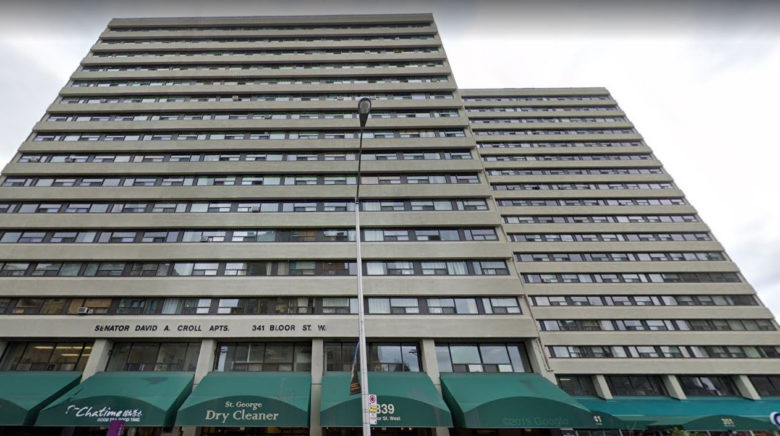
- Paul Isaac, Principal in Charge, HH AngusThe Senator David A. Croll Apartment building, formerly Rochdale College, is a typical multi-unit residential building managed by the Toronto Community Housing Corporation.
This 335 kW combined heat and emergency power (CHeP) project was built to avoid the cost of replacing a diesel generator, with a significant saving of $300,000. Conventional emergency on-site generation uses dedicated equipment that is rarely operated, yet has a very high capital cost (known as a ‘stranded asset’). HH Angus converted this stranded asset to provide an economic benefit to the facility. The benefit comes from recovering heat so that the overall efficiency rose from 33% to 83%, as well as the use of natural gas, which is cheaper than diesel.
The new generator produces enough electricity for the entire building load on most days. The heat generated by the engine is captured and used to heat the domestic hot water system and building spaces, thereby producing a highly efficient use of the fuel - greater than 90%!
The most important benefit for the building’s occupants is the increased emergency power load capabilities. Instead of powering just a minimum of elevator and emergency lighting services during power outages, the CHeP system provides a power load that runs all regular systems, including heating and air-conditioning systems.
SERVICES
Prime Consultant | Mechanical Engineering | Electrical Engineering
PROJECT FEATURES
Status: Completed 2008
LOCATION
Toronto, Ontario
KEY SCOPE ELEMENTS
Combined Heat and Emergency Power (CHeP) | Co-generation tied into a network system, a first for Toronto | Stranded asset converted to economic benefit - heat recovery efficiency rose from 33% to 83%
A Toronto ‘first’!
The 341 Bloor Street system was a first in Toronto and was carried out with funding assistance from the Toronto Atmospheric Fund and Natural Resources Canada.
Ford Motor Company of Canada
Fuel Cell Building
This building was designed to house Ford’s ‘Fumes-to-Fuel’ technology, which converts toxic volatile organic compounds (VOCs), generated during the painting process, into electricity that powers the plant’s operations.
The Oakville system began with a 120KW internal combustion engine that was installed as part of this project. Ford had plans to add additional power generating equipment.
HH Angus served as Prime Consultant for a new, state-of-the-art, 10,000 ft2 building to house a patented process for the capture of VOCs from spray booths.
This engineered industrial building, with a height of 35.5 feet, was constructed adjacent to the existing Ford plant, but is not linked to the plant. The building contains a public viewing area for Ford’s green energy system, a training room, offices, warehouse and washrooms. All public spaces were air-conditioned. A steam boiler provides heating for both the fuel cell process and the building. The electrical feed to the building supports both the process and building. It was connected to an existing electrical substation located inside the existing plant.
As Prime Consultant, we were responsible for all architectural, engineering and structural disciplines for the building, as well as site services and associated utilities for the fuel cell process to function properly.
SERVICES
Prime Consultant | Mechanical Engineering | Electrical Engineering
PROJECT FEATURES
Size: 10,000 ft2 | Status: Completed 2008
LOCATION
Oakville, Ontario
KEY SCOPE ELEMENTS
Engineered industrial building - with a height of 35.5 feet | Prime Consultant for all disciplines (architectural, structural, mechanical & electrical) as well as site services and associated utilities for the fuel cell process to function properly