
Service: Electrical Engineering
Great Canadian Entertainment
Great Canadian Casino Resort Toronto
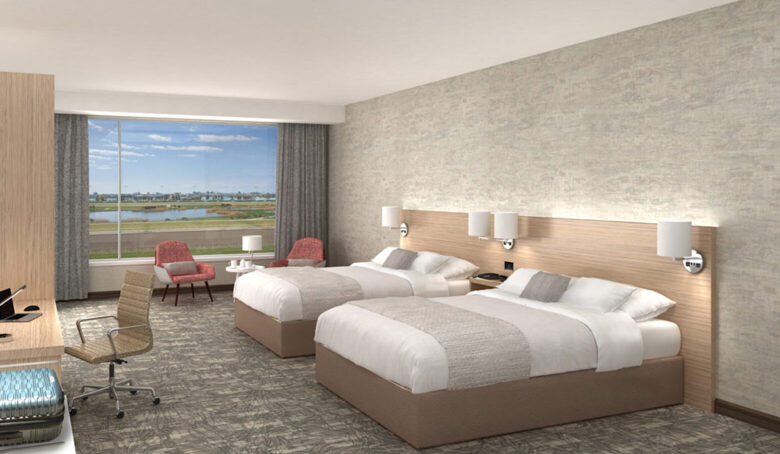
The Casino Resort site features live gaming, horse racing, entertainment, and dining on a 33-acre site in the Greater Toronto area. The venue includes two hotels, a theatre, 240 gaming tables and over 2500 electronic gaming machines.
The project consisted of 8 major components, including casino and associated food service outlets (350,000 ft2)., main gaming floor and lobbies, VIP gaming space, support/office spaces, washroom blocks, OPP offices, security offices, etc. The gaming floors feature ~ 2,575 electronic gaming machines and 240 tables. The work also included parking lots, roadways and minor greenspaces, a theatre space and two hotels, each with 400 rooms.
30+ new food service areas meant an additional 1500 pieces of equipment had to be accommodated. This additional load required supplemental electrical connections and, with 33 acres of new build, a completely new electrical feeder from Toronto Hydro.
For telecommunications distribution, HH Angus added redundant site entrance facilities, 30+ new telecoms rooms, and 2 new distribution rooms. The new facility is linked to the existing Grandstand, with the transition of various systems into the new build. A new monitoring suite for the security and surveillance group houses more than 15 operators as well as a new DVR room to service the entire site.
The project required solutions to a number of challenges, chiefly the schedule was of paramount concern for the client. The team worked under tight deadlines to ensure the casino design was completed in a timely fashion in order to welcome customers as quickly as possible. To accommodate the accelerated schedule, strategies were developed to save time during design in order to speed construction.
The fast-tracked schedule challenged communications as well, in terms of turnaround time for decisions. The design team pushed forward to achieve deadlines, but also had to devise procedures to accommodate lagging feedback. This also applied to the construction teams. HH Angus’ deep experience with the client and site enabled a “short hand” which afforded us the flexibility to leave blank areas in the design and come back to these once a decision was made. This saved design resources, and the client appreciated that assumptions were made to allow the project to keep moving forward, and that it did not interfere with our ability to modify designs when decisions were finalized.
The main challenge for the IT and security components involved integrating all stakeholder requirements from the existing Grandstand into the new facility. As these groups have varied approaches to design, our previous projects and site knowledge helped to clarify the final requirements.
The client is developing multiple casino properties throughout Ontario concurrent with the Casino Toronto project, and wanted to apply lessons learned. This created an evolving security standard and, in order to accommodate this, the HH Angus design team deferred changes as long as possible (without impacting the site) in order to reduce the need to re-issue drawings and specifications.
SERVICES
Electrical Engineering | ICAT/Security Design | Lighting Design
PROJECT FEATURES
33 acres with over 1.4 million ft2 of indoor space | Status – Current phase completed 2023
LOCATION
Toronto, Ontario
KEY SCOPE ELEMENTS
Fast-track schedule| 30+new food service areas | Over two dozen new telecom rooms | Gaming floor engineering required the least possible impact on gaming machines to minimize downtime | IT and security components were integrated from existing grand-stand into new facility
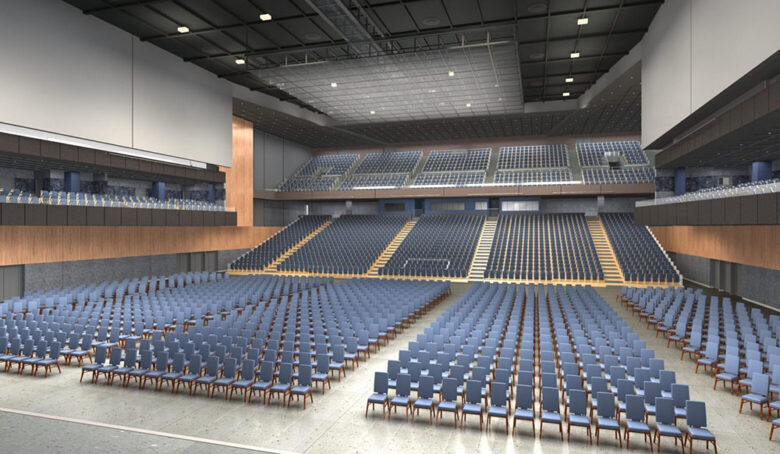
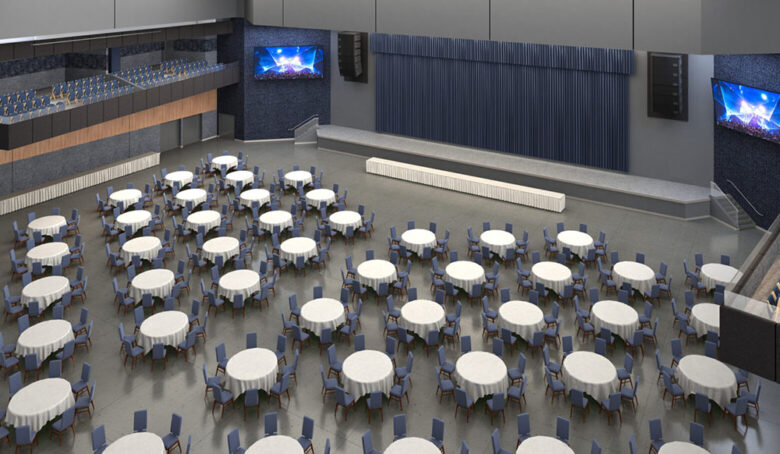
Multi-purpose 110,00 ft2 theatre
This space houses traditional stage events, and can accommodate trade shows and sports such as centre ring (boxing) events, conferences, and celebrations. In the traditional stage configuration, the theatre features 5000 seats. The space also houses several bars and a full event kitchen. The kitchen and bars have over 150 pieces of equipment requiring specialized electrical connections with flexibility for future bar installations.
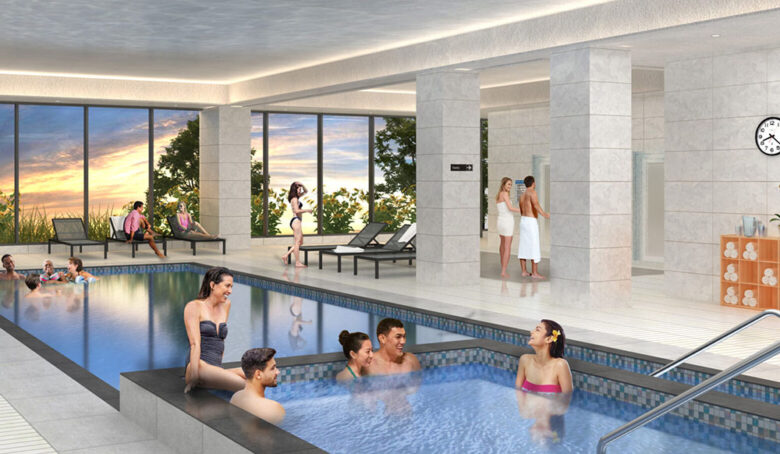
Rest and relaxation for the whole family
The 600,000 ft2 parking structure is a 6-storey parkade, with 5,500 parking spots. Both the underground parking and the parkade include EV charging stations. The underground parking encompasses the entire lower level of the Casino, both hotels and the theatre, as well as the major mechanical, electrical and IT/Security spaces. There are 5 major high voltage rooms with various smaller electrical rooms throughout, and a generator room housing three 1500kW diesel generator units, with a separate generator synchronization switchboard room.
University Health Network
Toronto Western Hospital Critical Infrastructure Reliability Project
Toronto Western Hospital (TWH), part of the University Health Network, initiated a project to enhance the reliability of its critical mechanical and electrical (M&E) infrastructure. With aging equipment dating back to 1954, TWH partnered with HH Angus to undertake a comprehensive upgrade project aimed at ensuring the continuous operation of high-risk medical services.
As the prime consultant, HH Angus was responsible for assessing the condition of existing mechanical and electrical systems. Following the assessment, upgrades were made to the facility, including replacing emergency generators, and establishing a new electrical room serving the ORs and the broader hospital campus. Subconsultants, including architectural, civil, environmental, and cost consultants, played crucial roles throughout the project.
To determine suitable locations for generators, extensive investigations were conducted, including structure analysis, examination of building codes, and assessment of environmental impacts. This collaborative effort led to the approval of a new penthouse above the East Wing for generator placement. The final engineering package involved locating the emergency generators at grade in a new fenced area, alongside the supply and installation of two new 1100W emergency generators and upgrades to the electrical network and distribution systems within the powerhouse.
HH Angus leveraged reality capture workflows, utilizing photogrammetry and a Matterport Pro2 camera, to produce a digital 3D model of the powerhouse and infrastructure. Through the efforts of our BIM team, 3D scans were taken of mechanical and electrical spaces, including complex piping and ductwork, to generate point clouds for reference in Revit. These models accurately depict existing systems, including central steam, chilled water, and emergency power systems serving the hospital's ORs and surrounding campus.
Additionally, the project has been recognized for excellence, with the generator exhaust stack winning in the category of Steel Works – Sculptures – Outdoor Pavilions at the Canadian Institute of Steel Construction's Awards for Excellence. https://hhangus.com/award-for-excellence/
The Toronto Western Hospital Critical Infrastructure Reliability project exemplifies HH Angus's commitment to delivering reliable solutions for healthcare facilities.
SERVICES
Mechanical Engineering | Electrical Engineering | Reality Capture
PROJECT FEATURES
3D modeling of powerhouse |
Scans of mechanical and electrical (M&E) spaces using Matterport Pro2 Camera | Point clouds of complex spaces using ReCap Pro Status: Completed
LOCATION
Eastern Canada
KEY SCOPE ELEMENTS
Upgraded mechanical and electrical systems | Installed emergency generators | Ensured environmental compliance | Modernized the powerhouse infrastructure.
University Health Network
Toronto General Hospital Rapid Assessment Centre (RAC) Expansion
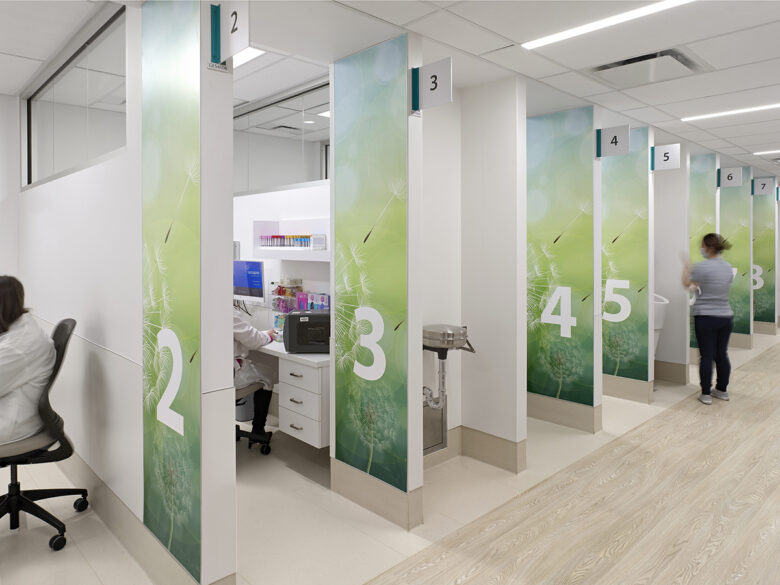
HH Angus was engaged to provide mechanical and electrical engineering, IMIT consulting, and lighting consulting services for this 20,000 ft2 phased renovation at Toronto General Hospital. The space now includes a Rapid Assessment Centre, Diagnostic Test Centre, and Admitting and Pre-Admission Clinics.
|
The emergency department (ED) was designed to serve ~ 20,000 patients annually but was receiving more than 55,000 patients To better manage these volumes, a dedicated Rapid Assessment Centre (RAC) was added so that ED staff can triage lower acuity patients to the new "fast track" area, enabling primary emergency areas to care for more complex patients. Our team worked in conjunction with the client and other consultants to perform a pre-tender constructability review. This review included potential approaches to minimize disruption outside areas of construction, identify potential installation challenges, and complete pre-demolition of the first phase of work to identify any unknown site conditions in advance of construction. Due to the age of the existing space, there was a high probability of building systems and equipment being beyond their service life, and a certainty that codes and standards relevant to the design of the new space had changed. To address this and mitigate any risks, HH Angus performed a pre-design review to identify any specific potential issues with the new space and recommend steps to further address the unknowns. Scanning and 3D captures were performed regularly throughout construction, using Matterport Pro 2 and a Theta V 360 Camera. This provided the client with regular site progress updates and, in future, will allow for dimensionally accurate references for locating MEP services behind walls and ceilings. It also allowed for a more focused presence on-site, as construction progress was made available remotely to a range of project stakeholders amid COVID-19 pandemic restrictions. The existing ventilation systems presented a significant gap for the project, as their capacity to support the new functions of the space was unknown. To address this, HH Angus investigated and presented several options for review, taking into consideration the client’s budget, schedule, and planned upgrades for existing infrastructure.
|
SERVICES
Mechanical Engineering | Electrical Engineering | IMIT Consultant | Lighting Consultant
PROJECT FEATURES
Accelerated project schedule | Status: Completed 2022
LOCATION
Toronto, Ontario
KEY SCOPE ELEMENTS
Phased renovation | Pre-tender constructability review and pre-design review | Scanning and 3D captures to document site progress and provide dimensionally accurate site references for future access
Accelerated schedule
The project schedule was aggressive, requiring close and efficient collaboration between HH Angus, the client, and all other consultants. All construction documents and constructability reviews were completed in 12 weeks.
Lonsdale Energy Corporation
Heat Recovery Feasibility Study
HH Angus conducted a study to evaluate the feasibility of exhaust air heat recovery from the Global Relay (GR) data centre facility at 22 Gostick Place in North Vancouver, BC.
Some of the key aspects of the study included:
- The location and footprint of the heat recovery system components were studied within the context of considerable site constraints. The study evaluated the design, construction, and cost considerations for the implementation of the proposed heat recovery system.
- We investigated available heat pump technologies that would be appropriate for recovering waste heat and would satisfy the LEC DES requirements.
- The energy recovered would be used by a water source heat pump to provide hot water to the local LEC District Energy System (DES).
- A water source heat pump system was proposed as the best solution to provide the ability to recover heat from the building ventilation system. The new system would recover heat from the GR facility and would transfer this recovered heat via a hot water loop to the local LEC DES.
- Heat recovery is feasible for the facility and can provide up to 1,100 kW of heating capacity to the LEC DES.
- Constraints to the design of the heat recovery system were also identified, and included:
(i) the quantity of air exhausted from the facility is not fixed and ranges at each exhaust plenum on a seasonal basis and depending on outdoor air temperature – this impacts how much heat can be recovered at a given time;
(ii) the minimum and maximum exhaust air temperatures range from 30°C to 43°C (86°F to 110°F) - the temperature of the exhaust air will influence how much heat can be recovered from the exhaust air; and,
(iii) the cross-sectional area available for the heat recovery coil - the more cross-sectional area that is available for a given amount of heat transfer, the less deep the coil must be (and less airside pressure drop penalty is incurred).
The study concluded that a purpose-built containerized heat pump system would be the most suitable solution to meet the needs of the project. This new containerized structure would be conveniently located adjacent to the GR facility and would exhibit the same architectural character as the existing facility. The proposed heat pump system would include one heat pump unit (based on Emerson Heat Pumps) and four heat recovery water pumps. Control valves, piping accessories, ventilation, lighting, and system controls would all be included in the proposed pre-fabricated containerized enclosure.
Outdoor hydronic piping would connect the heat pump enclosure to the GR facility and the proposed hydronic heat recovery coil system. The heat recovery coil system would consist of four new heat recovery coils placed within the existing facility exhaust air plenums. The existing exhaust fan motors would have to be upgraded in order to address the additional pressure drop introduced by the new heat recovery coils. This fan motor upgrade would also trigger upgrades to the existing electrical infrastructure.
SERVICES
Prime Consultant | Mechanical Engineering | Electrical Engineering
PROJECT FEATURES
Size: 5,600,000 ft2 | Status: Ongoing
LOCATION
Vancouver, British Columbia
KEY SCOPE ELEMENTS
Feasibility study | Heat recovery
Collège Bois-de-Boulogne
Server Room Air Conditioning
Pavilion Saint-Paul
One of the challenges of this project was to replace the main and redundant cooling systems in the server room while maintaining operations and minimizing impact on the College.
HH Angus’ scope of work for this project included analyzing the mechanical and electrical infrastructure of the server room, and proposing permanent corrective solutions. It also included implementation of solutions to provide redundancy for the mechanical infrastructure to guarantee full operation of the servers in the event of a critical power emergency or failure of the server room's main cooling system.
In order to analyze the existing installations, we performed site visits and surveys, and interviewed technicians responsible for the server room to gather as much information as possible about the existing installation, including any ongoing issues. We also reviewed and analyzed plans for the existing installation and performed a condition assessment - chilled water and glycol piping, insulation, ventilation ducts, electrical systems serving the equipment, and control systems - and took measurements in the mechanical and server rooms to ensure the new equipment could be properly installed while still providing space for maintenance work.
Following our analysis, we produced a report outlining the scope of work to refurbish the server room's cooling systems (main and redundant systems), ensuring the installation complied with current codes and standards. We produced mechanical and electrical drawings and specifications, including proposed solutions and equipment selection, and consulted with vendors to identify optimal solutions to meet the client’s requirements. During the tender process, we reviewed bids submitted by the contractor and provided recommendations to the College.
The intention was to complete this work over the summer when classes were not in session. Due to COVID-related delays in production of the necessary equipment, the work could not be completed on the original schedule and had to be undertaken when students were back in class. We worked very closely with stakeholders to avoid disruption to the students, with some work being completed before and after class or on weekends.
SERVICES
Mechanical Engineering | Electrical Engineering
PROJECT FEATURES
Analysis of mechanical and electrical infrastructure | Recommendations for permanent corrective solutions | Infrastructure redundancy in the event of critical power emergency | Status: Completed 2022
LOCATION
Montreal, Quebec
KEY SCOPE ELEMENTS
Analysis of existing equipment and installations | Design of new cooling systems