
Service: ICAT
Quinte Health
Prince Edward County Memorial Hospital Redevelopment
The new Prince Edward County Memorial Hospital (PECMH) will be a leading-edge healthcare facility designed to met the current and future capacity needs of its local communities.
HH Angus was engaged by Quinte Health to provide the new hospital with mechanical and electrical engineering services, lighting, audio-visual, and security systems design, as well as energy modeling and ICAT digital strategy.
The project includes the construction of a new hospital with improved equipment and facilities, including a 24-hour emergency department, acute inpatient unit, helipad, surgical suite, diagnostic imaging, laboratory, dialysis unit, and other specializations.
Significantly, the PECMH will be the first acute care hospital in North America with an all-mass timber structure. Unencapsulated mass timber is faster and more accurate in construction compared to steel and concrete and sequesters carbon better than any other structural material.
Use of mass timber is estimated to be saving the project over 9 million kilograms of embodied carbon dioxide compared to a conventional steel and concrete structure. Other sustainable aspects of the new building include energy-efficient windows, selection of sustainable materials and use of natural light in the building’s atrium.
Our systems design included a hybrid plant comprising a geo-exchange heat pump, gas-fired heating, domestic hot water generation and humidification elements. A six pipe, 200-ton geo-exchange heat pump has been designed to allow simultaneous heating and cooling to maximize efficiency performance. The geothermal system is expected to provide 50 percent of the hospital’s cooling and 90 percent of its heating. The new building will feature a solar panel installation on the roof, which will lower electricity operating costs and avoid the use of 2,000 tons of carbon during the panels’ lifespan.
Engineering for a mass timber building requires a substantial amount of coordination early in the design phase to identify service openings, since, unlike drywall, wood openings cannot be adjusted once cut. The design also provides less ceiling space, so all services located there must be closely coordinated with architectural and construction partners. The same applies to the geofield. Mass timber buildings are very lightweight compared to traditional concrete structures, and their technical requirements differ significantly.
Our ICAT team assisted in the development of a Digital Strategy to support the project. This included a current state assessment, visioning, implementation roadmap creation, and budget cost estimate. The ICAT scope of work also included systems integration design involving development of a comprehensive integration use case list through user engagement sessions, as well as developing the construction documents, consisting of an integration matrix, integration concept model / diagram, and integration specification.
The project was featured in Canadian Architect Magazine in April 2025, and in a 1-minute YouTube video.
Image courtesy of Quinte Health
SERVICES
Mechanical Engineering | Electrical Engineering |Lighting Design | Audio-visual Design | Security Systems Design | Energy Modeling | ICAT Digital Strategy
PROJECT FEATURES
Design-Bid-Build (DBB) procurement model | 24/7 Emergency Department | 23 Inpatient beds | Satellite hemodialysis unit | Diagnostic imaging unit | Helipad | Completion 2027
LOCATION
Picton, Ontario
KEY SCOPE ELEMENTS
Replacement of existing facility | Enhanced clinical capabilities | Geothermal energy exchange, building integrated photovoltaics | Preparation of building for future electrification and net-zero carbon status
Balmoral Recreation Centre
Renovation and Expansion
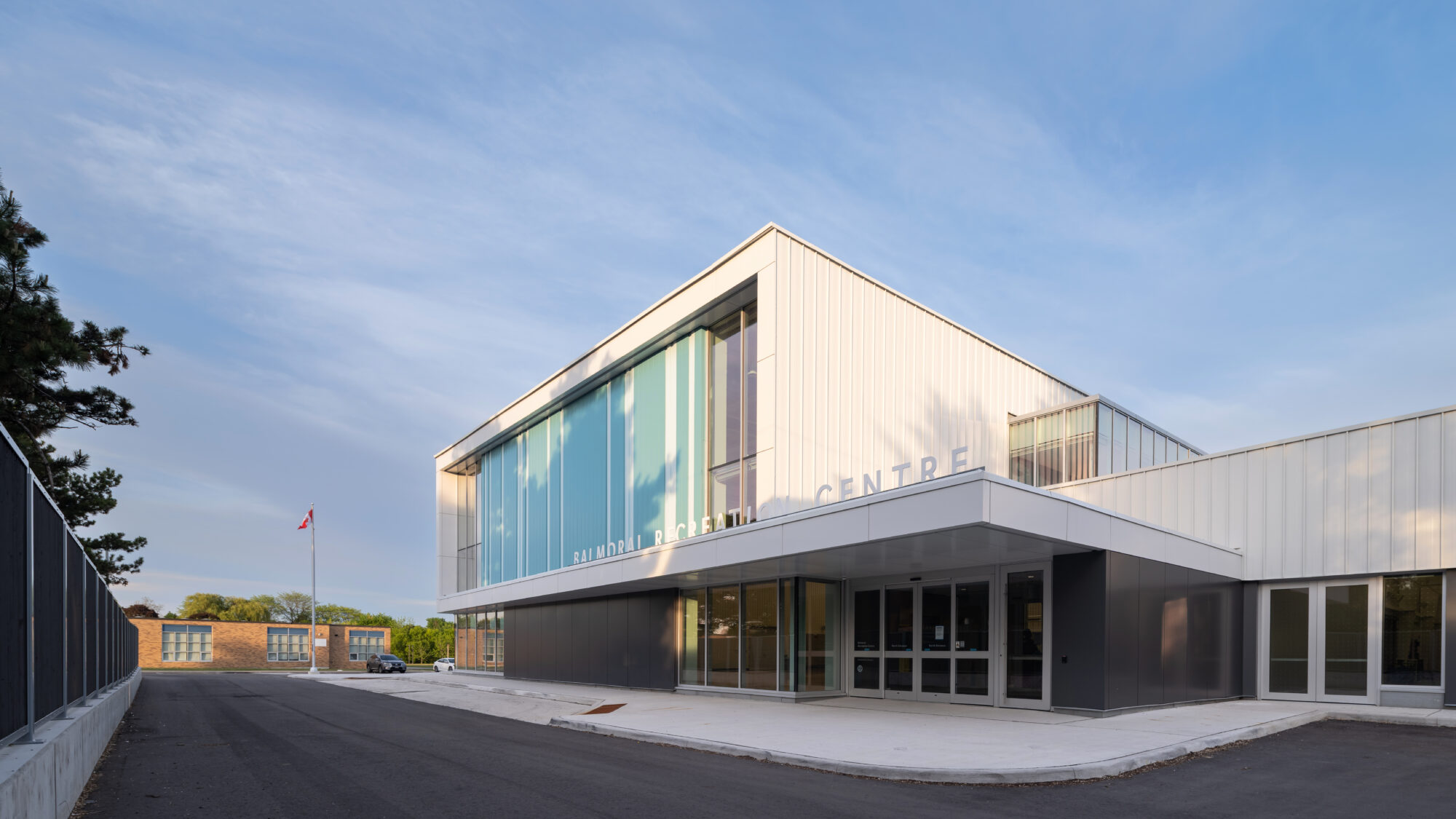
The City of Brampton undertook an extensive revitalization of its existing 53-year old recreation centre.
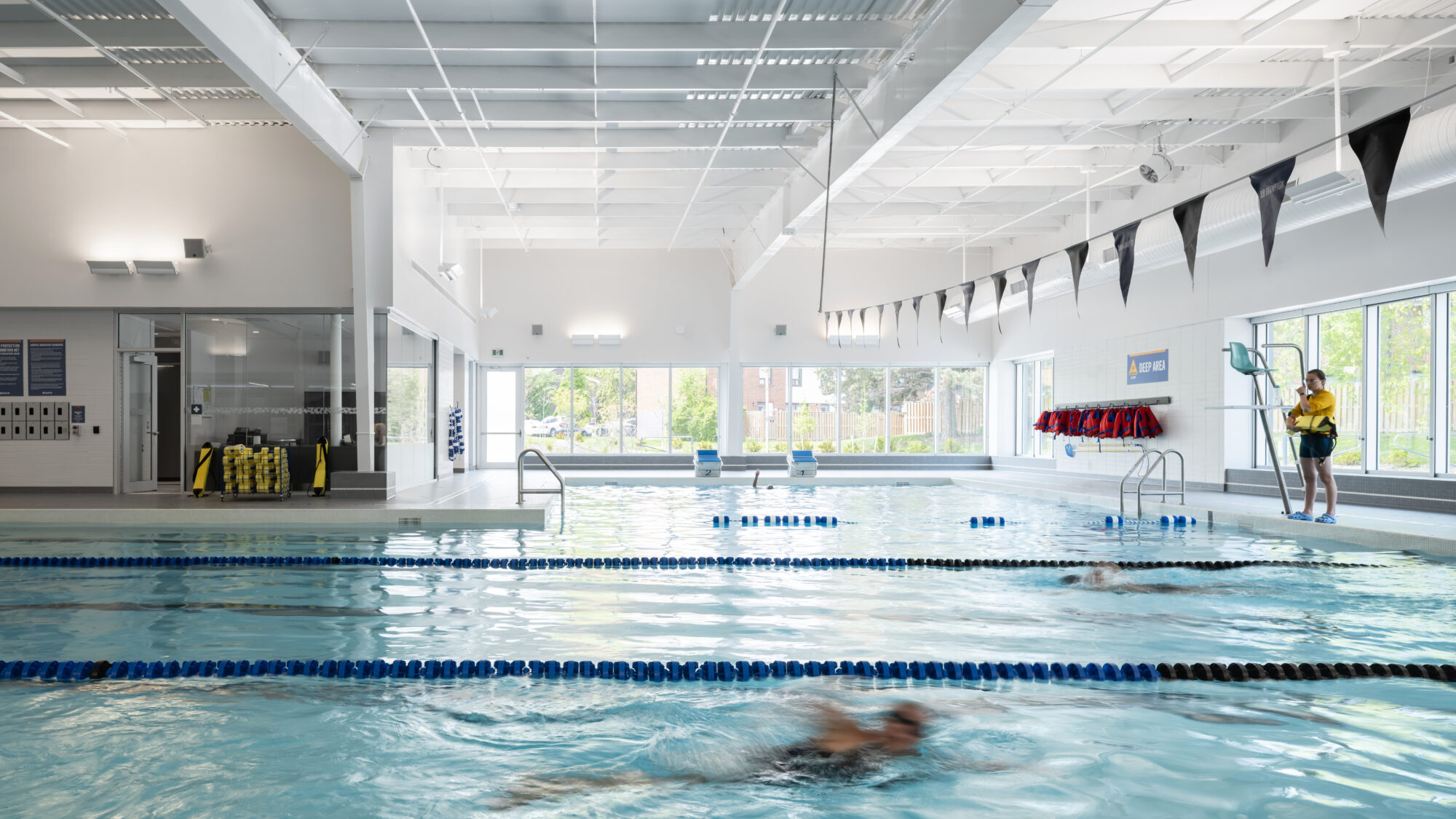
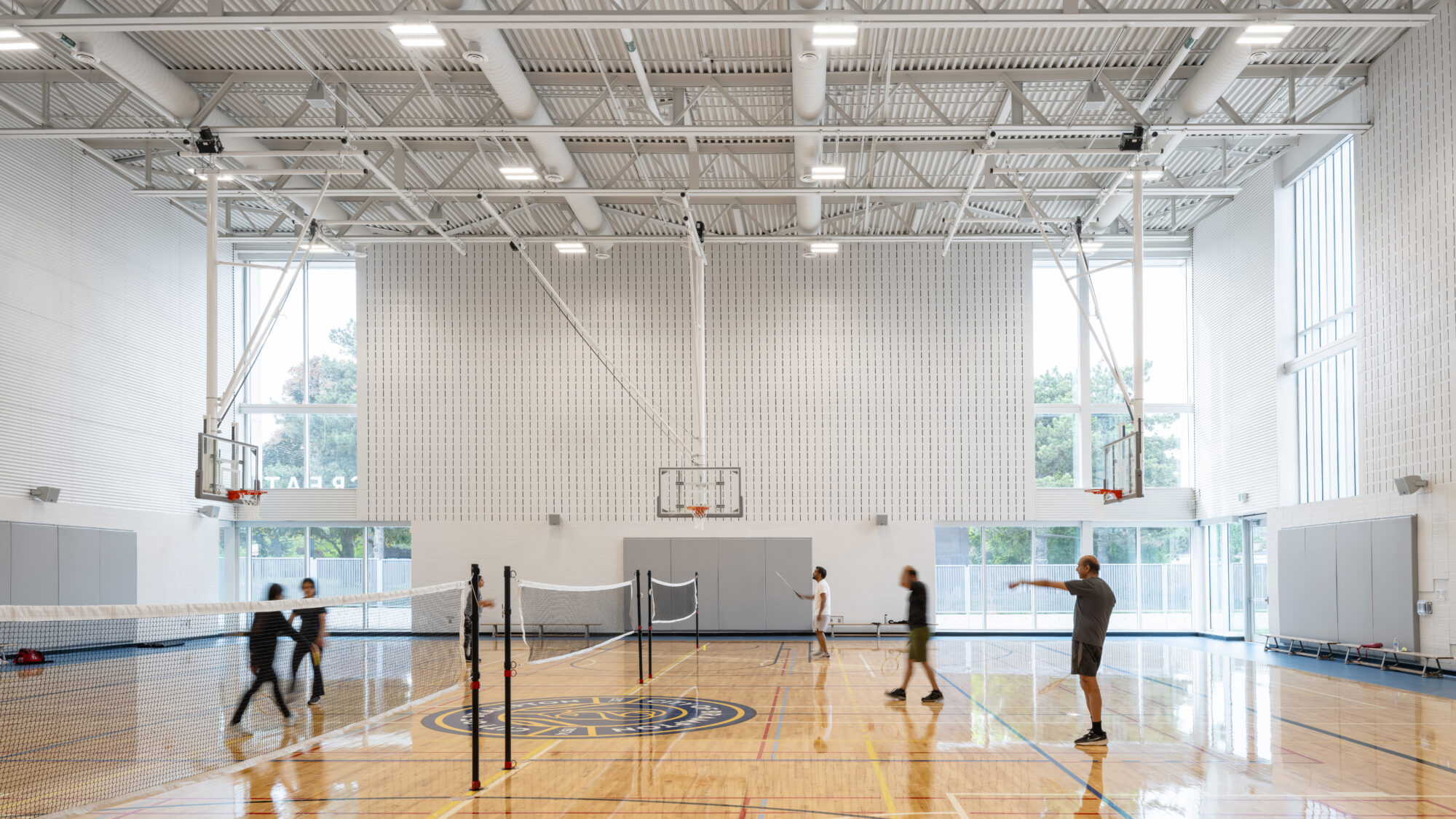
The project involved a near-total demolition of the existing facility, with the exception of the steel structure of the pool and pool basin. The renovation and expansion have delivered an almost entirely new facility, nearly doubling the size of the former centre to 35,000 ft2. LEED Silver certification is in progress. HH Angus provided mechanical and electrical engineering, ICAT design, and lighting design services.
Key features include the rehabilitated pool, updated change rooms, a multi-sport gymnasium with an Olympic-sized FIBA court (smaller than an NBA court), a sauna, and two multi-purpose rooms that can open to create a more versatile space. The design also incorporates a large, interconnected lobby and administrative offices. Exterior improvements include additional onsite parking, as well as a new outdoor splash pad and playground.
The project replaces all air distribution systems serving the rehabilitated pool and introduces a new high-efficiency condensing boiler system to heat both the pool and the building perimeter. Heat recovery from discharged water is used to preheat incoming cold water for the pool, contributing to the achievement of multiple LEED credits. High-efficiency rooftop units equipped with heat pumps and heat recovery wheels significantly reduce overall energy consumption. Occupancy and CO₂ sensors further optimize performance by ramping mechanical systems up only when spaces are in use. Automatic curtains and daylighting strategies reduce energy demand for interior lighting, while low-flow plumbing fixtures throughout the facility help minimize water usage.
SERVICES
Mechanical Engineering | Electrical Engineering | ICAT Design | Lighting Design
PROJECT FEATURES
Renovation and expansion to create a new facility nearly doubling in size to 35,000 ft2 | LEED Silver certification in progress | Status: Completed 2025
LOCATION
Brampton, Ontario
Air Canada
20 Queen Street - Office Fitout
Air Canada’s downtown Toronto office encompasses the entire 26th floor at 20 Queen Street West, with a total area of 20,000 ft2, including the elevator lobby.
For Air Canada's recent renovation, HH Angus provided mechanical and electrical engineering and ICAT design services.
The project featured high-end finishes in the reception area, café, a fully accessible washroom, integrated advanced lighting controls and multiple AC units to enhance occupant comfort and energy efficiency. The result is a modern, high-performance space custom tailored to the client’s needs.
SERVICES
Mechanical Engineering | Electrical Engineering | ICAT Design
PROJECT FEATURES
Size: 20,000 ft2 | Status: Completed 2025
LOCATION
Toronto, Ontario
KEY SCOPE ELEMENTS
Complete Interior fitout including elevator lobby | Advanced lighting controls | AC units
Infrastructure Ontario
MECP-MLITSD Science Facility Complex
The new complex will bring together existing operations into a single, modern, science and laboratory facility that will strengthen capacity to deliver on critical mandates of protecting the environment, public health, and safety.
The new Science Facility Complex will permanently replace Ontario's Ministry of the Environment, Conservation and Parks’ (MECP) facility at 125 Resources Road and Ministry of Labour, Immigration, Training and Skills Development’s (MLITSD) temporary facility at 6295 Northam Drive (formerly at 81A Resources Road).
HH Angus’ Science and Technology team is providing compliance (PDC) engineering services for this Design-Build-Finance-Maintain (DBFM) infrastructure project that will protect public health and the environment through advanced monitoring of radiological materials, environmental contaminants, and live viruses. The new facility will have purpose-built, flexible design to allow for adaptable laboratories, science workshop spaces, and offices to support both current operations and future growth.
SERVICES
Mechanical Compliance Engineering | Electrical Compliance Engineering | ICAT Compliance Engineering
PROJECT FEATURES
P3-DBFM | Targeting LEED Silver certification | Flexible and adaptable laboratory and office spaces | Status: Ongoing
LOCATION
Oakville, Ontario
Build Nova Scotia
Cape Breton Hospital Redevelopment
The value of an integration strategy is to streamline integration use case development and to implement only the integrations that are most useful to the users.
Angus Connect was engaged as a Master Systems Integrator by Build Nova Scotia (BNS) to produce an Integration Strategy and Implementation Plan for Cape Breton Regional Hospital (CBRH). CBRH is currently undergoing a large, multi-year redevelopment to redesign and rebuild healthcare infrastructure to support patients, families, healthcare staff, and researchers. The existing facility is undergoing a renovation in addition to construction of three new buildings:
- Energy Centre - to provide power and heat to the new expansion and the existing facility
- Cape Breton Cancer Centre - to house dedicated services for patients undergoing cancer treatments, and their families
- Clinical Services Building - to serve as main referral and trauma centre for Cape Breton Island
Initial Goal of the Project
Angus Connect collaborated with BNS, CBRH, and other key stakeholders to create a comprehensive integration plan aligned with the redevelopment project’s overall vision, and the building and clinical systems in the existing and new buildings. The focus of the integration strategy and implementation plan was to:
- Achieve a thorough understanding of existing building conditions
- Define the organization’s vision and goals related to integration
- Develop a complete list of user requirements in the form of integration use cases
- Identify gaps or issues with existing systems and recommend high level strategies for resolution
- Develop implementation documents for further planning and costing
- Manage potential risks through early identification and discussion
- Facilitate a smooth deployment of new system integration
The value of an integration strategy is to streamline integration use case development and to implement only the integrations that are most useful to the users. Often integrations are noted in
engineering design documents; however, they are generally high level and may not include actual use cases that describe the action the client wishes to achieve. Our role is to delve more deeply into processes, determine which use cases the users want, and determine feasibility. We can then produce design documents for those integrations that describe how the integrations will take place, and how to assess success.
Challenges/Solutions
The client wanted an integration strategy and implementation plan that would:
- Complete a current state assessment of the existing facility and the redevelopment design documents to identify current challenges, opportunities, and integrations that were already included in the redevelopment cost
- Develop an integration vision to help guide the organization in the implementation of integrations
- Ensure the integrations being implemented were helpful to users (not just done for the sake of being done)
- Ensure the integrations being implemented had a good ROI
- Identify potential issues or risks, such as technology decisions not yet taken
- Develop a ‘roles and responsibilities’ matrix for integration use cases
Essentially, the client wanted to implement realistic integrations that made sense for the use case, helped staff and users, were not too complex, and not too expensive. Similar to many other rural healthcare organizations, the project was sensitive to cost and to ongoing support requirements (ie. staff who know how to manage these integrations in future)
How It Was Achieved
Through leadership interviews, visioning session, and end-user meetings, we developed an integration vision and list of integration use cases to improve the user experience, allow for seamless communications, and improve situational awareness of building operations. Our team’s technical knowledge of building systems, clinical systems, and integration models ensured our recommendations were grounded in reality while also meeting CBRH’s vision for an integrated and connected future.
Key Takeaways
As a part of our current state assessment, we visited CBRH to see the building and clinical systems in action and met with users to better assess their current workflows. We believe this step to be vitally important to truly understanding existing conditions. While review of existing documentation and virtual meetings are a critical component to gathering information on existing systems, understanding current workflows, identifying potential issues, and brainstorming potential improvements all benefit from in-person consultation
SERVICES
Master Systems Integrator
PROJECT FEATURES
Size: 5,600,000 ft2 | Status: Ongoing
LOCATION
Cape Breton, Nova Scotia
KEY SCOPE ELEMENTS
A comprehensive integration strategy and implementation plan | Ensure ROI | Identify potential issues or risks | Develop roles & responsibilities matrix