At HH Angus, research is not an end in itself—it is a way to solve real-world challenges for building owners and operators.
By partnering with academic institutions and industry organizations, we are helping develop new approaches to understanding building performance, optimizing operations, and improving the long-term value of building assets. These initiatives allow us to explore emerging technologies before they become commercially available, while ensuring the work remains grounded in practical applications that benefit our clients.
The result is a collaborative process in which researchers develop innovative tools and methodologies, while HH Angus helps identify practical applications and connects those solutions to client needs.
These initiatives also help us build new capabilities and expertise that can be applied to future projects, creating long-term value for clients.
Partnering with TMU to Optimize Building Performance
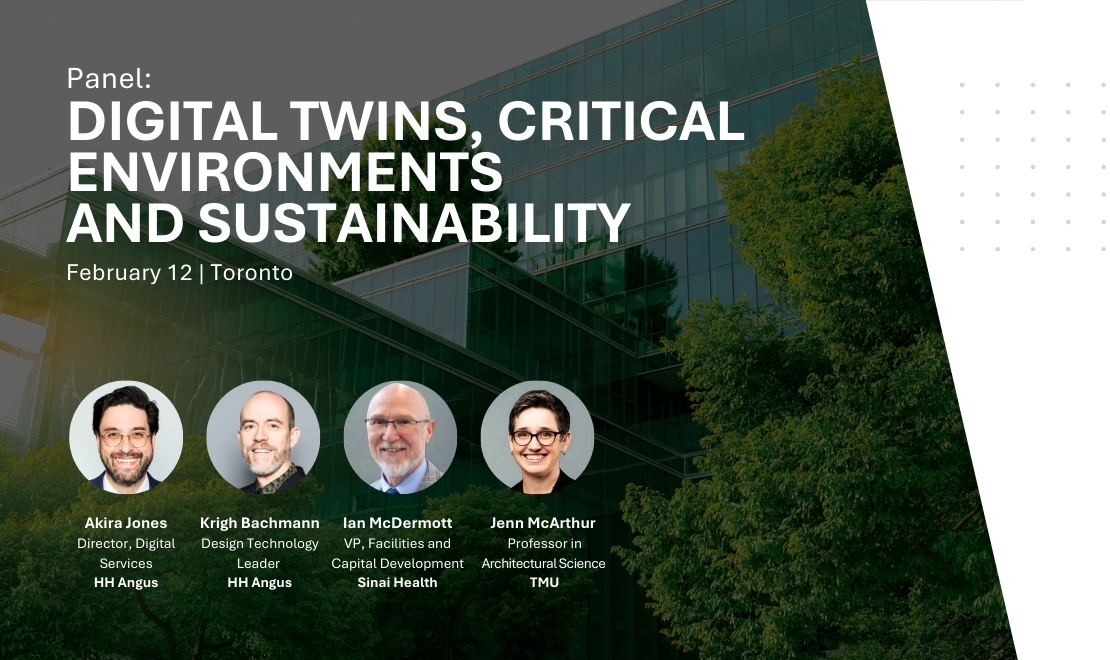
One of HH Angus' current research partnerships is with Toronto Metropolitan University (TMU), where researchers are exploring new ways to model and optimize building systems using operational data.
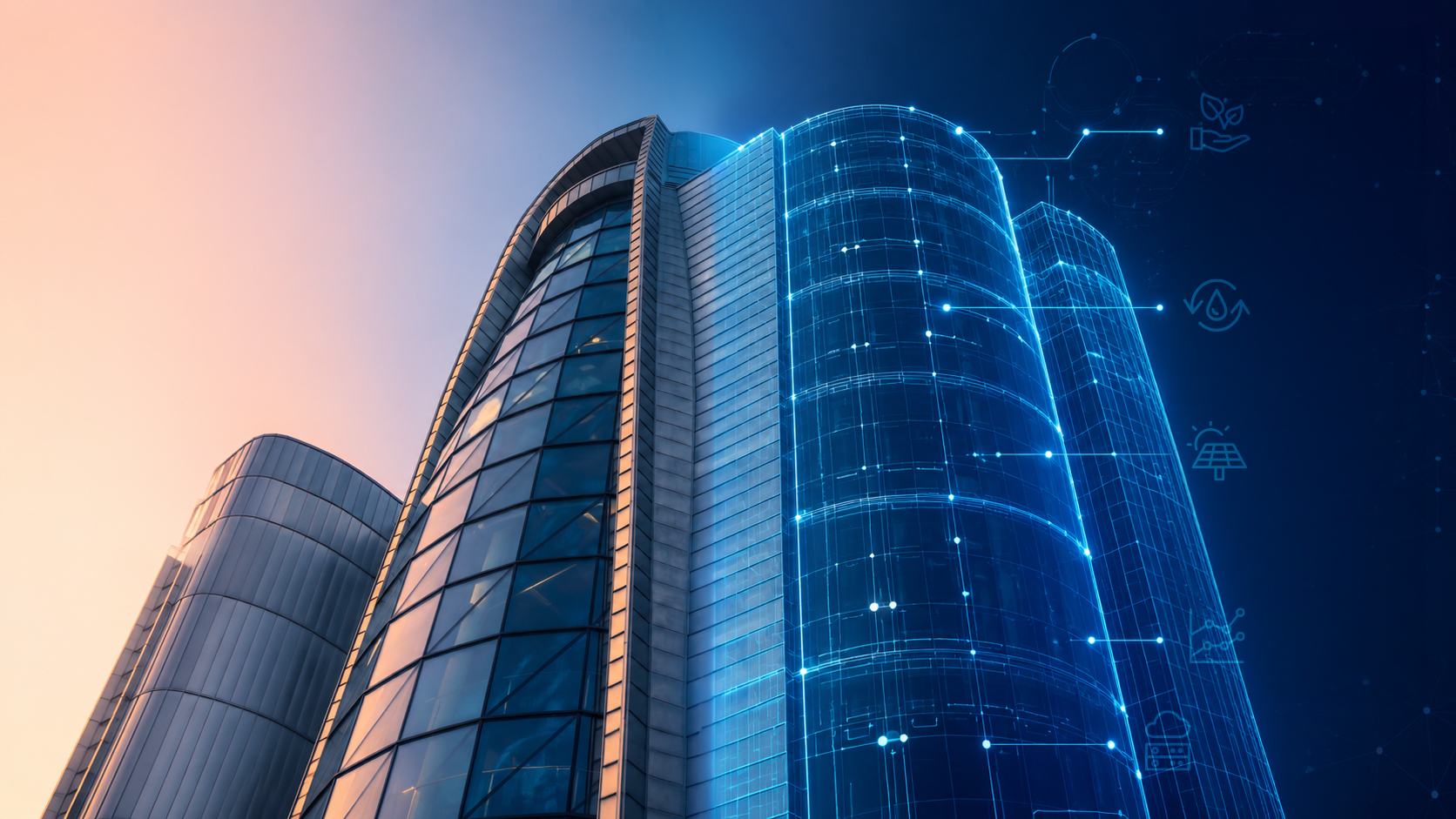
The project focuses on creating digital twins—virtual models that replicate the behaviour of real hospital building systems. Using available building data, these digital twins can simulate how systems perform under different operating conditions and test optimization strategies before any changes are made in the field.
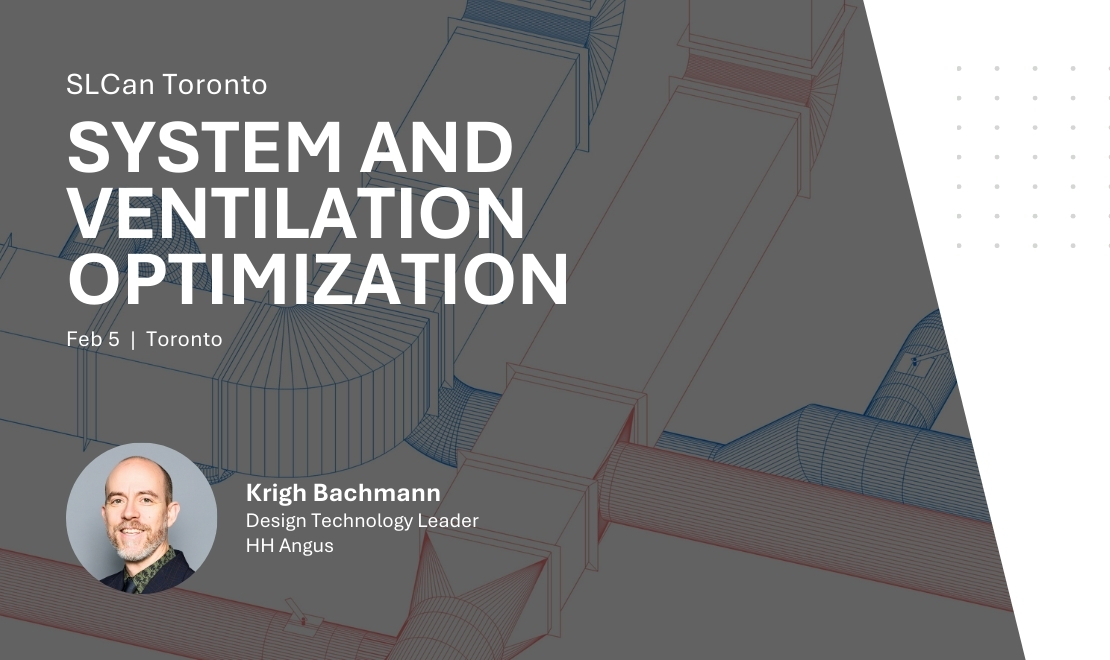
The research is focused on central plant systems, particularly chillers and boilers, which are among the largest energy consumers in healthcare facilities. Even small improvements in how these systems operate can have a significant impact on energy consumption and operating costs.
The project is progressing through several stages, beginning with the development of digital twins, followed by testing optimization strategies within those virtual environments. Recommendations are then validated in real facilities, with the long-term goal of creating a scalable platform that can help generate optimization recommendations more efficiently.
Helping Clients Optimize Faster and with Greater Confidence
For building owners, one of the greatest challenges is determining how to improve performance without introducing operational risk.
In healthcare environments, for example, facility operators must prioritize reliability above all else. Critical systems support patient care and must operate continuously, often leaving little room to experiment with new approaches.
Digital twin technology helps address this challenge by allowing proposed changes to be tested virtually before they are implemented in a live environment. Operators can evaluate potential impacts, validate assumptions, and gain confidence in the expected outcomes before making adjustments to building systems.
Another important advantage is the ability to work with incomplete information. Traditional modeling approaches often require detailed data that may not be available in existing facilities. The research being conducted with TMU is exploring ways to model system performance using the data that is already available, helping accelerate the path to optimization.
Ultimately, the goal is to help clients improve building performance more quickly and efficiently while reducing uncertainty.
Building on a Strong Operational Foundation
The research also reinforces an important lesson about optimizing existing facilities: advanced technologies are most effective when built on a strong operational foundation.
Retro commissioning often provides one of the greatest opportunities to improve building performance by identifying gaps between a system's original design intent and its current operation. Over time, facilities evolve, operational requirements change, and systems may no longer perform as intended.
By first ensuring that systems are operating properly, building owners can establish a solid baseline for improvement. Technologies such as digital twins and machine-learning-based optimization can then build on that foundation, helping owners achieve additional gains in efficiency, performance, and reliability.
Supporting Decarbonization and Asset Performance
While energy savings are a key outcome of the research, the benefits extend beyond utility costs.
Reducing energy consumption directly supports decarbonization objectives and can help organizations advance their sustainability goals. Optimized operations can also improve resiliency by enabling facilities to get more value from existing infrastructure while maintaining reliable performance.
The technologies being developed also have potential applications in predictive maintenance. By using operational data to identify performance issues and detect anomalies earlier, building owners can move toward more proactive maintenance strategies that improve reliability and support long-term asset management.
Creating a Feedback Loop for Better Design
The value of this work extends beyond existing facilities.
One of the long-standing challenges in the building industry is understanding how facilities actually perform once they are occupied and operating. Research initiatives such as the TMU partnership create an important feedback loop, providing insights that can inform future designs and improve how building systems are engineered.
By combining academic research, operational data, and practical industry experience, HH Angus is helping create smarter approaches to building performance—approaches that benefit both today's facilities and future buildings.
Looking Ahead
As digital twin technology, advanced analytics, and machine learning continue to evolve, opportunities to improve building performance will continue to expand.
Through partnerships with organizations such as TMU, HH Angus is helping bring these innovations from the research environment into real buildings, where they can deliver measurable value. The result is a stronger ability to help clients reduce energy consumption, improve operational performance, optimize assets, and make more informed decisions about the future of their facilities.