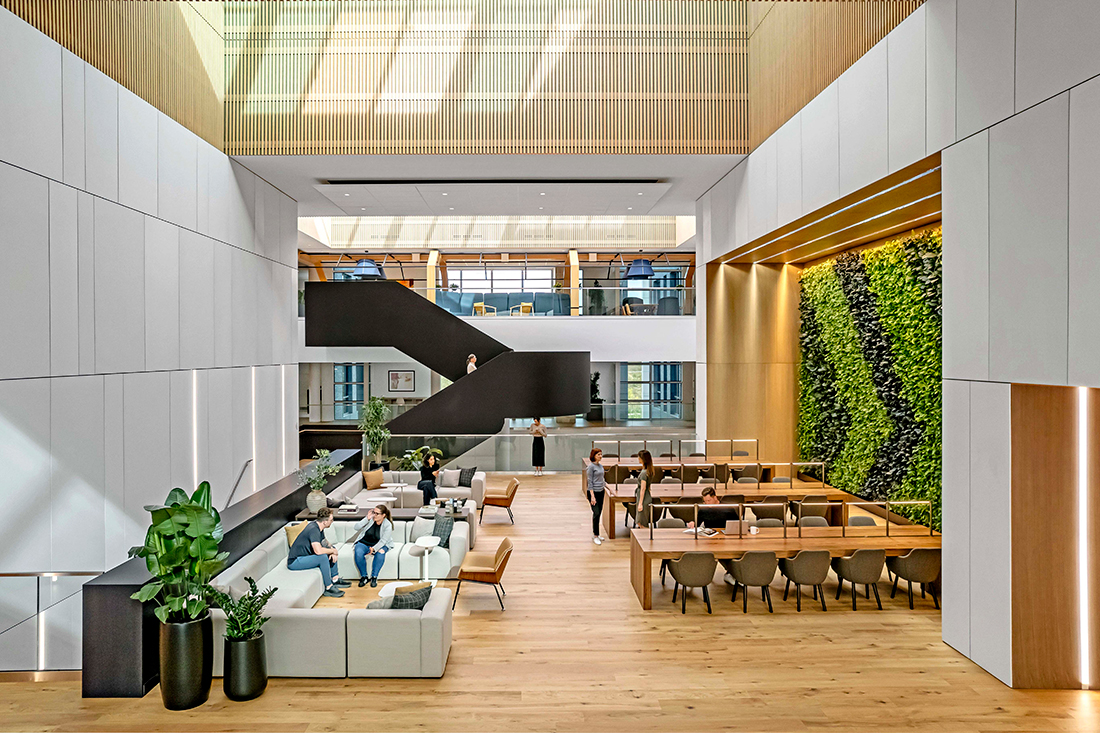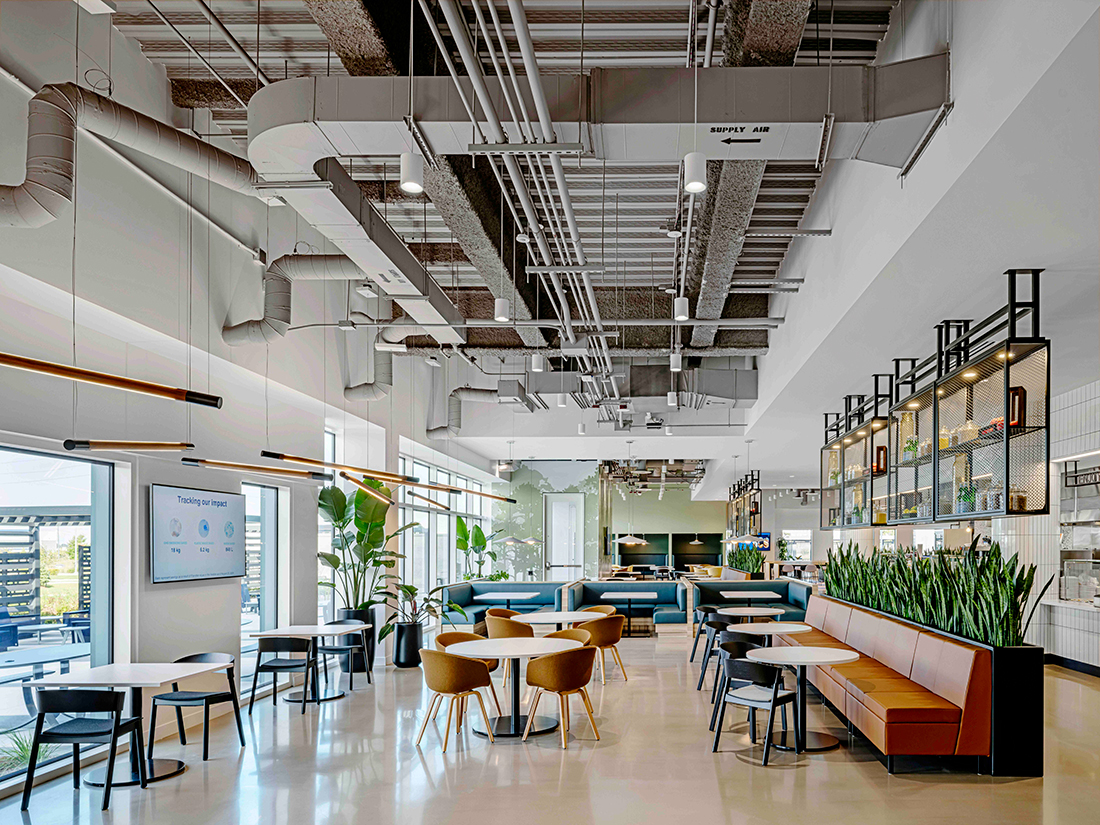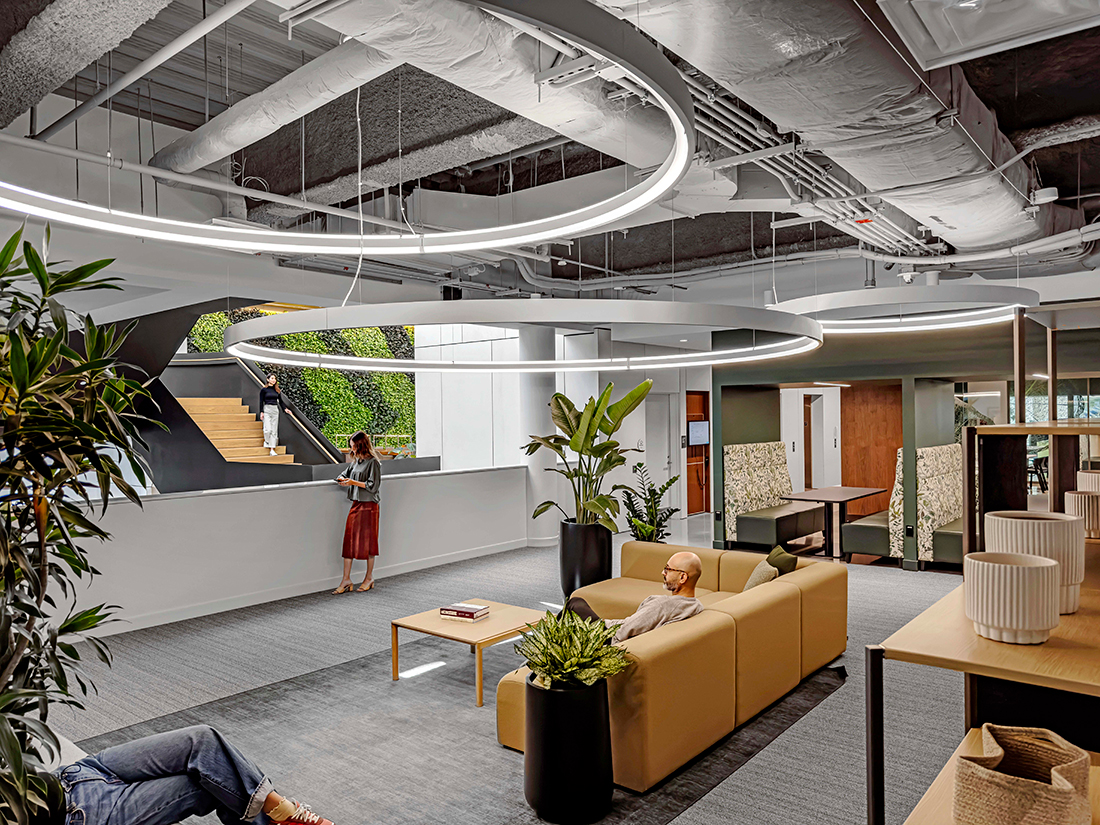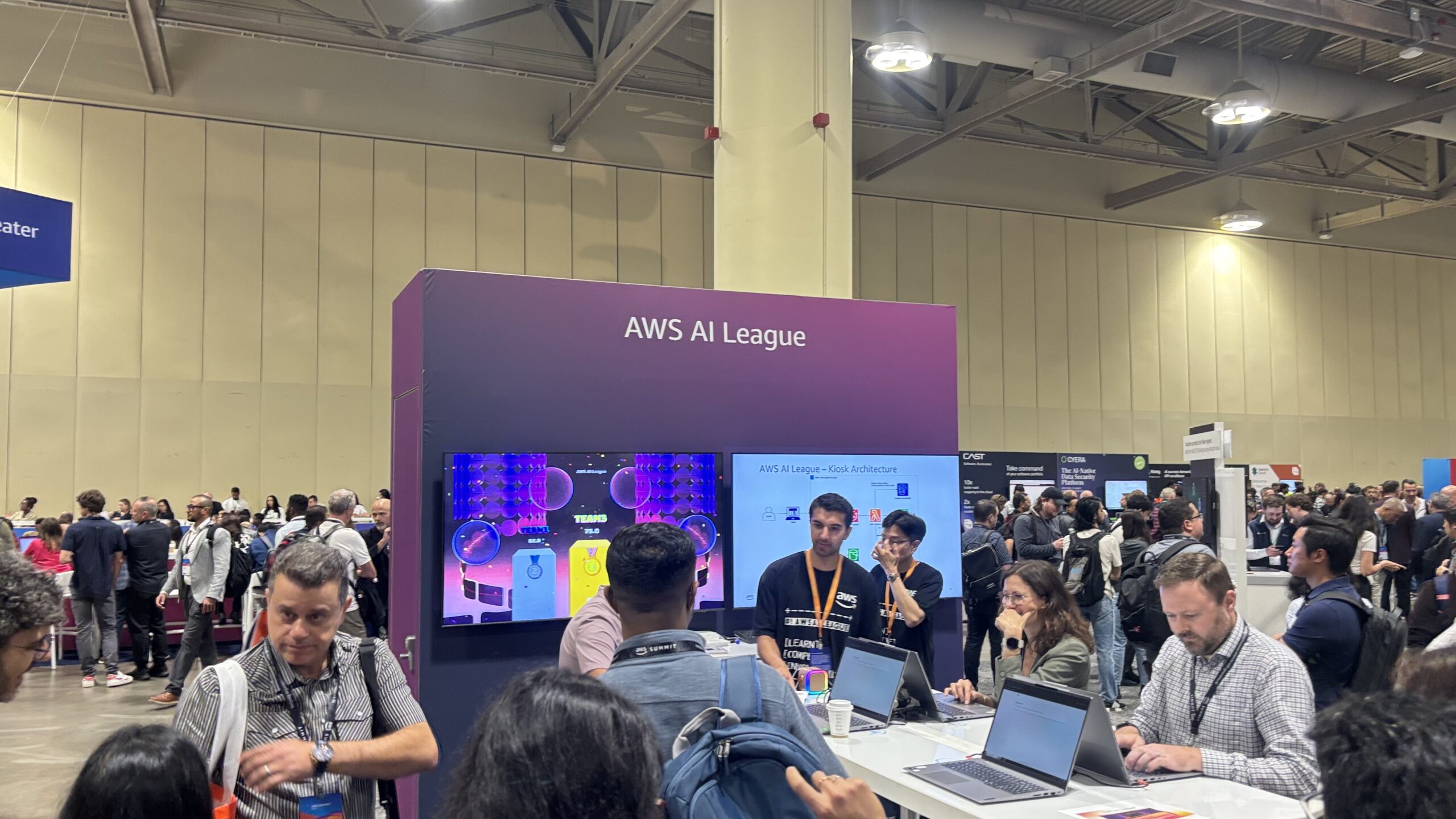
Canadian hospitals are being asked to deliver more care with finite operating, capital, energy, and staffing resources. 

The following article has been published in Canadian Healthcare Facilities magazine (pp 14/15), in the REMI network and in CHES eNews.


Building More Care, Not Just More Buildings

Canadian hospitals are being asked to deliver more care with finite operating, capital, energy, and staffing resources. For Operations, Clinical, and Facilities leaders, a new facility is not only a capital project. It is a long-term operating commitment.

Decisions made during planning, design, procurement, construction, commissioning, and transition directly affect operating cost. Escalation, labour availability, procurement risk, phasing, and construction-market pressures are real. But a quieter cost driver is uncertainty around staffing models, workflows, maintainability, logistics, energy performance, digital systems, and resilience.

Every dollar spent compensating for uncertainty is a dollar that cannot be invested in patient care, staff support, or capacity. The question is not “How do we deliver the building?” It is “How do we make sure the investment produces the performance the hospital needs?”


Start with Operational Intent

The answer starts before design. Hospitals need a clear operating intent that is documented, tested, and managed throughout the project with the same discipline as the budget and schedule.

A useful operating intent defines what the facility must do, not just what it must contain. This shared framework helps clinical, operations, facilities, IT, security, logistics, finance, and capital-planning teams evaluate trade-offs consistently. It also helps prevent value engineering from becoming performance erosion.


An effective operating intent includes:

  • Care model
  • Staffing assumptions
  • Patient and material flows
  • Resilience and maintainability
  • Energy performance
  • Digital enablement
  • Performance objectives


Design the Whole Operating Platform

A hospital is a coordinated operating platform. Mechanical, electrical, vertical transportation, communications, security, IMIT, digital, logistics, and building automation systems shape care delivery and operations.

Modelling (e.g. energy, CFD, digital twin) tests options before they become embedded costs. Mechanical and electrical decisions influence reliability, comfort, infection control, resilience, and maintainability. Vertical transportation affects patient movement, staff response, emergency flows, and service efficiency. IMIT and digital systems support communication, wayfinding, patient flow, and decision-making.

This is where operational readiness becomes the strategic connector. It is the discipline that connects the hospital’s vision to decisions being made during the capital project. It asks: how will choices affect staffing, downtime, energy use, response times, maintenance access, user training, activation, and the first year of operations?


Treat Logistics and Technology as Operational Infrastructure

Hospitals are logistics-intensive environments where people, supplies, equipment, waste, food, specimens, and information flow continuously. Yet decisions about elevators, pneumatic tubes, automated guided vehicles, storage, loading docks, adjacencies, and service corridors are often made in isolation. Greater value comes from treating them as an integrated operational network.

The same principle applies to digital infrastructure. It begins with operational questions: What decisions need to be made? Who needs the information? What action follows when a metric falls outside tolerance? Building automation analytics optimize energy performance, while real-time locating systems improve equipment utilization, staff safety, and patient flow. Without accountability, data becomes noise.

On a large acute care hospital redevelopment project, logistics systems were evaluated as a coordinated operational network rather than as individual infrastructure components. Integrating conveyance systems, storage strategies, vertical transportation, and departmental adjacencies helped align material movement with planned clinical workflows to support operational readiness.

Commission the Hospital, Not Just the Systems

Substantial completion does not mean a hospital is ready to operate. Generators, air-handling units, elevators, and nurse call systems can all perform as intended while the operating model remains untested.

Day One readiness depends on more than completed building systems. Infrastructure, technology, workflows, logistics, maintenance, life-safety processes, wayfinding, training, and activation planning must work together. Hospitals should validate the operating model through integrated systems testing and scenario-based commissioning that simulates utility failures, logistics disruptions, staffing constraints, and clinical surges.

The objective is to uncover operational gaps while they can still be addressed.

Prior to opening one of Canada's first fully integrated smart hospitals, commissioning, simulation and activation exercises brought together infrastructure, clinical technologies, workflows, and staff to validate the intended operating model. This helped identify operational gaps before occupancy, supporting a smoother Day One transition.


Close the Loop After Occupancy

The first year of operation is the first real performance test. Establishing a post-occupancy optimization plan before move-in, with regular performance reviews, helps hospitals measure performance against operational intent and make adjustments as needed. Performance should be assessed across several areas, including facility performance (energy use, equipment downtime), operational efficiency (work-order trends, elevator wait times, bottlenecks), and user experience (response times, staff feedback).

Lessons learned should be captured to inform future projects. A disciplined feedback loop turns one capital project into organizational intelligence for the next.


Five Questions Hospital Leaders Should Ask Before Scope Is Fixed

  1. What operational outcomes must this project deliver?
  2. Which decisions will most affect staffing, patient flow, resilience, maintainability, energy performance, and operating cost?
  3. Where are we spending capital to compensate for uncertainty?
  4. How will the operating model be tested before occupancy?
  5. How will performance be measured and optimized after opening?


Conclusion

Success must be measured by more than occupancy, budget, and schedule. The better measure is whether the facility delivers the capacity, resilience, efficiency, maintainability, staff support, and patient experience it was intended to provide.

This is where HH Angus’ depth in healthcare matters. Operational readiness is stronger when informed by teams that understand mechanical and electrical systems, IMIT, vertical transportation, commissioning, energy modeling, logistics, sustainability, and clinical operations. By connecting services around a shared operating intent, hospitals make capital decisions that support their vision, reduce avoidable operating costs, and help facilities perform as intended.



Have Questions? Contact:

Kelly Henderson, BASc., MBA, Principal
Digital Strategy Lead, Associate Director, Angus Connect
T 416 841 8414
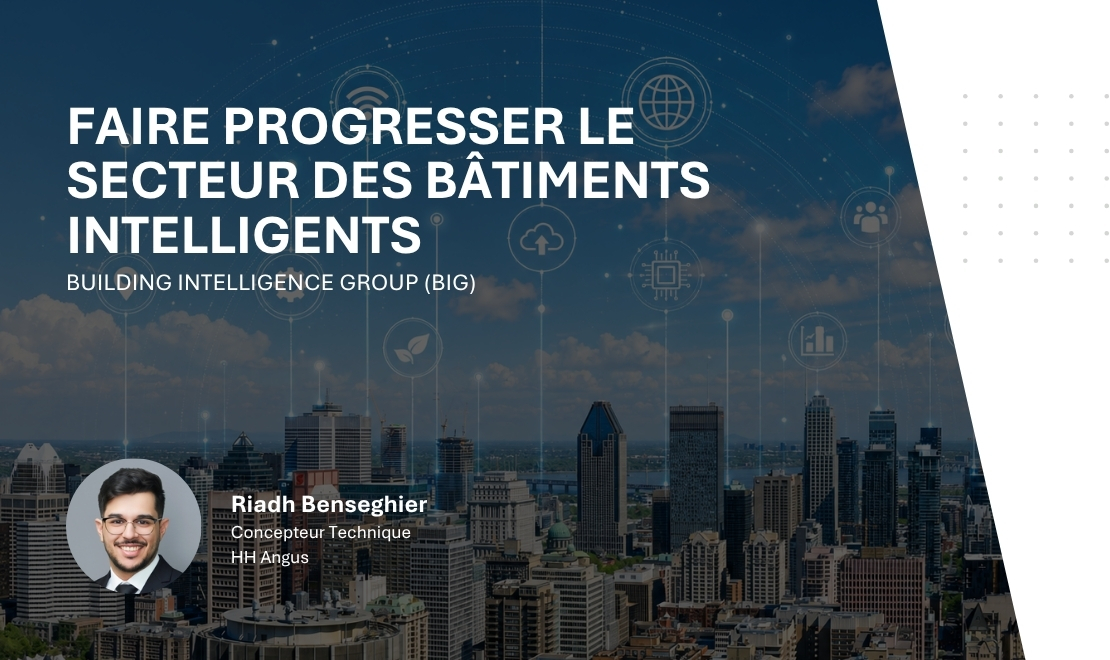


Le 10 juin | La nouvelle section montréalaise du Building Intelligence Group (BIG) donne le coup d’envoi de ses activités avec une table ronde portant sur «  l’adoption des technologies d’automatisation des bâtiments et optimisation des espaces dans les immeubles commerciaux ».

Le thème central de la table ronde : comment les propriétaires, consultants et manufacturiers s’alignent autour de l’efficacité opérationnelle, de l’expérience occupant, de la décarbonation et d’une utilisation plus intelligente des espaces.

Riadh Benseghier, concepteur technique au sein de notre équipe commerciale chez HH Angus, représente le point de vue de l'ingénierie-conseil. L'événement se déroule chez Distech Controls.


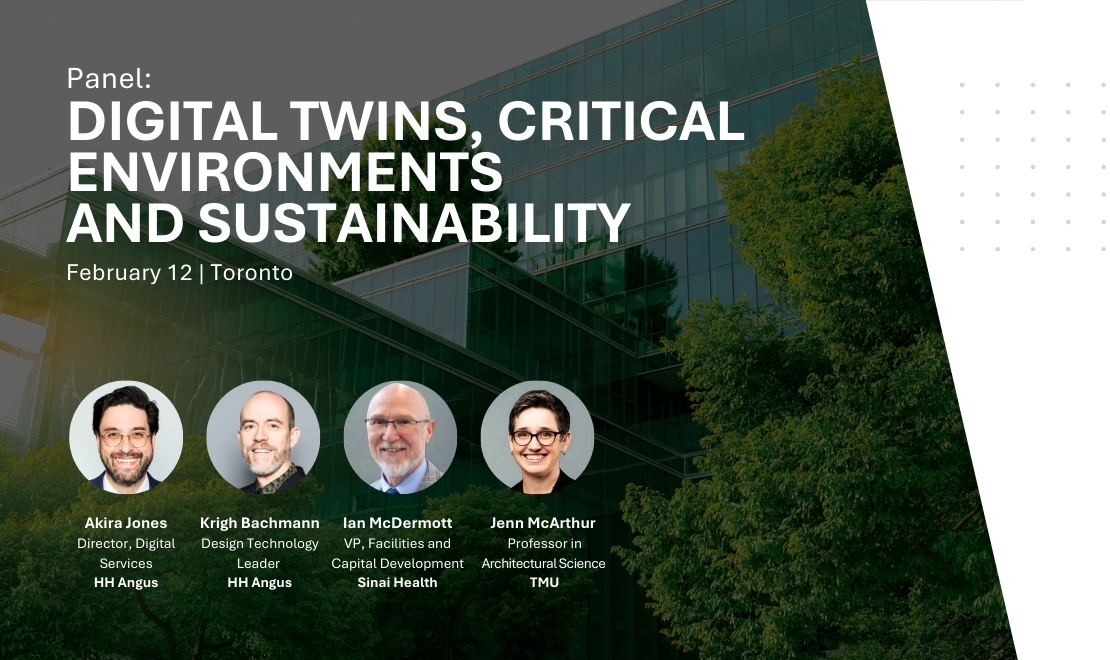
Digital Twin opportunities have increased dramatically given the advancement in technologies used to design, build and operate complex environments.

On February 12 in Toronto, HH Angus’ Akira Jones and Krigh Bachmann are taking part in an SLCan Toronto panel, sharing their expertise at the intersection of digital twins, critical environments, and sustainability. Also on the panel are Ian McDermott - Vice President, Facilities and Capital Development, Sinai Health and former president of Sustainable Labs Canada, and Jenn McArthur - Professor in Architectural Science, TMU, offering owner and academic perspectives to round out this dynamic conversation.

Akira and Krigh bring deep experience in applying digital twin technologies, smart building systems, and advanced design and delivery strategies to help organizations improve performance, resilience, and long-term sustainability—particularly in complex environments like laboratories and healthcare facilities.

The discussion will explore how digital twins have evolved—given the advance in technologies used to design, build and operate complex environments, where systems have matured from static models to real-time, predictive, and autonomous systems. The panel will also be discussing what can be done to create new and more sustainable laboratories, and how to make existing laboratories more sustainable.

Learn more / Register: SLCan Toronto - Knowledge & Networking Event | SLCan / LÉCan


Co-operators' new Guelph Headquarters building was recently honoured with a 2025 Toronto Section Award from the Illuminating Engineering Society. 

These awards recognize professionalism, ingenuity and originality in lighting design. Congratulations to our Lighting Design and Commercial teams, The Co-operators, and other members of the design team, including HOK, NEO Architecture, and Ecovert.

The lighting design was honoured for its success in enhancing the building's materials, function, and structure. An element of the client’s Net Zero strategy, it also infuses the building with natural daylight, maximizing energy use, and reinforcing the firm’s commitment to sustainability, for example by employing all-LED lighting and intelligent controls.

The all-electric project has been certified a ‘Zero Carbon Building – Design Standard’ by the CaGBC and is pursuing Net Zero Performance. It has also achieved LEED Gold and WELL Platinum certifications, and is targeting BOMA Best certification. 

HH Angus’ scope of work also included mechanical and electrical engineering, and IMIT consulting. To learn more about the project, click on the link below:
https://hhangus.com/projects/the-co-operators-headquarters-in-guelph/

To view other projects featuring the work of our Lighting Design team, click here:
https://hhangus.com/projects/?_service=lighting-design


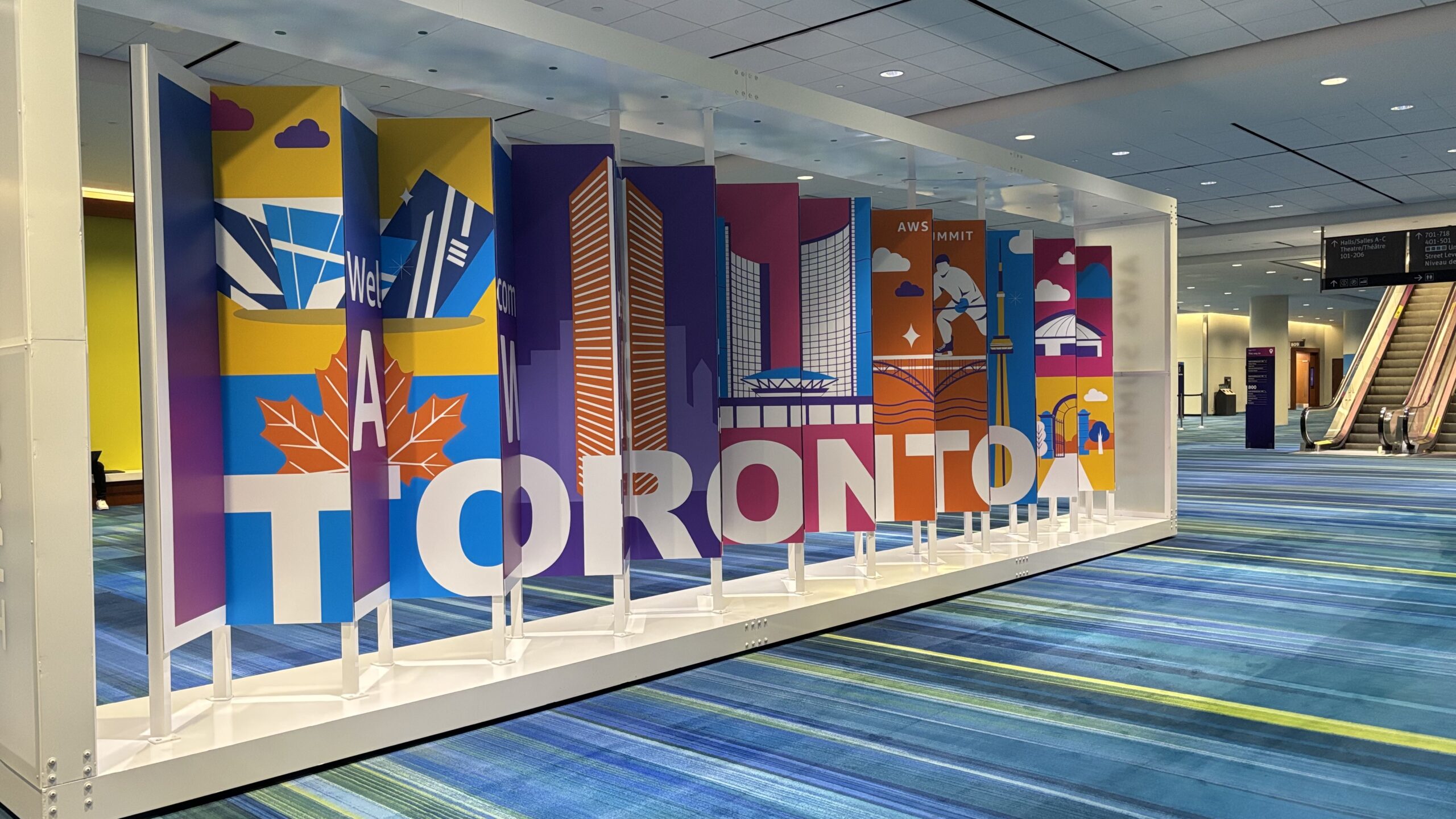
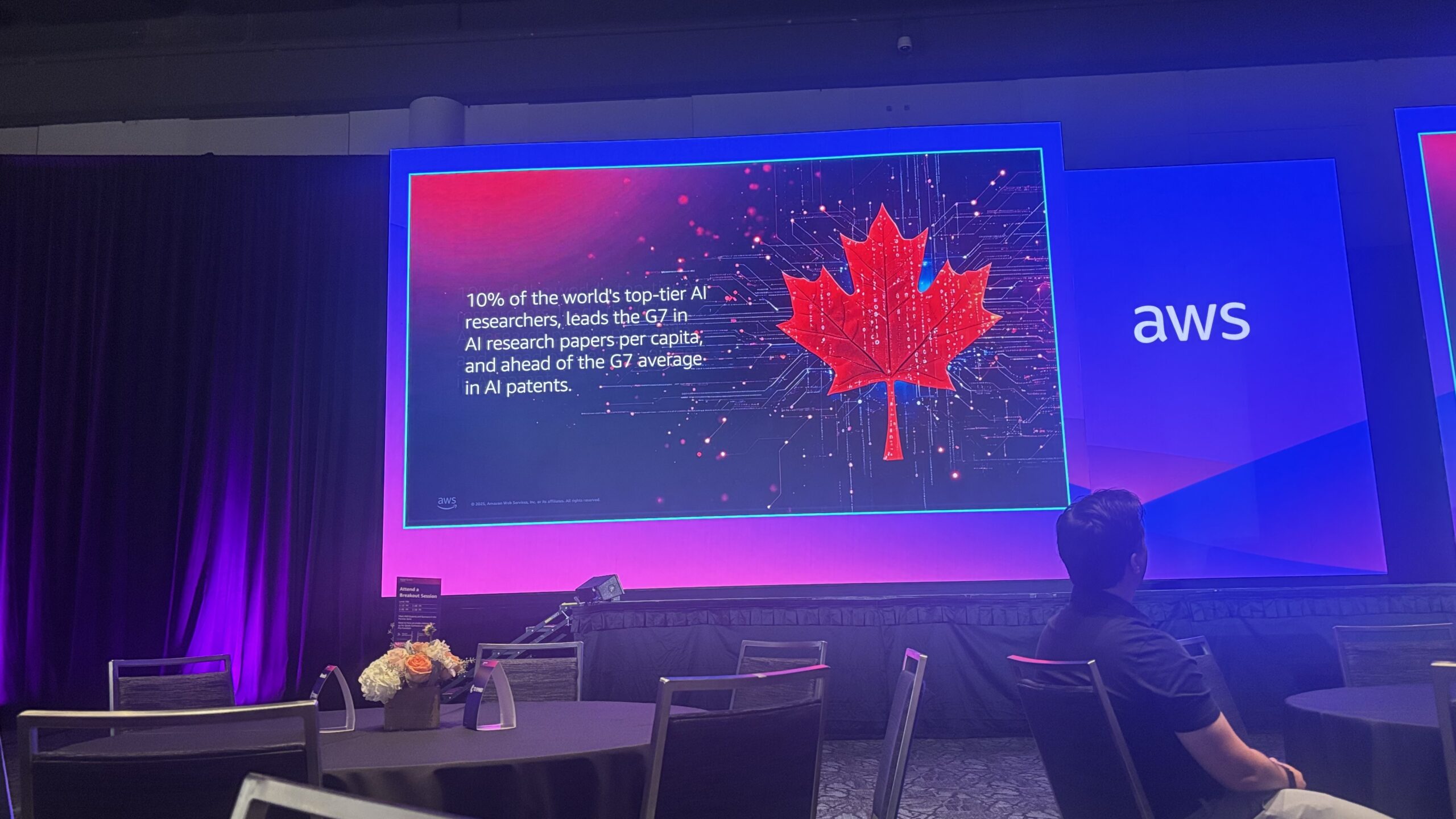
Our Digital Services team was well represented at the recent AWS Summit Toronto 2025 event.

This year’s event focused on two groups – Day 1 was dedicated to AWS partners like HH Angus' certified specialists, and Day 2 welcomed the entire AWS community.

Augusto Valdivia, our AWS DevOps Specialist, who has also presented at previous AWS Summits, took in the full event. Augusto is an AWS SysOps Administrator Associate, AWS Certified Developer Associate, AWS Professional Solutions Architect, and AWS Big Data Specialist. He has attended numerous AWS Summits in Canada and abroad, and took a few moments to share his impressions of the Toronto event. 

Augusto:
Both days were packed with learning, inspiration, and future-looking announcements. But more than anything, they were a chance to connect — with my team, with peers, and with the wider AWS community.

Day 1 – Partner Summit Highlights

Day One was all about partners and the deep dive into AWS’s latest portfolio. Topics included:

  • The Anatomy of Speed
  • Industry Solutions & Security
  • Generative AI and Migration/Modernization
  • AWS Marketplace evolution

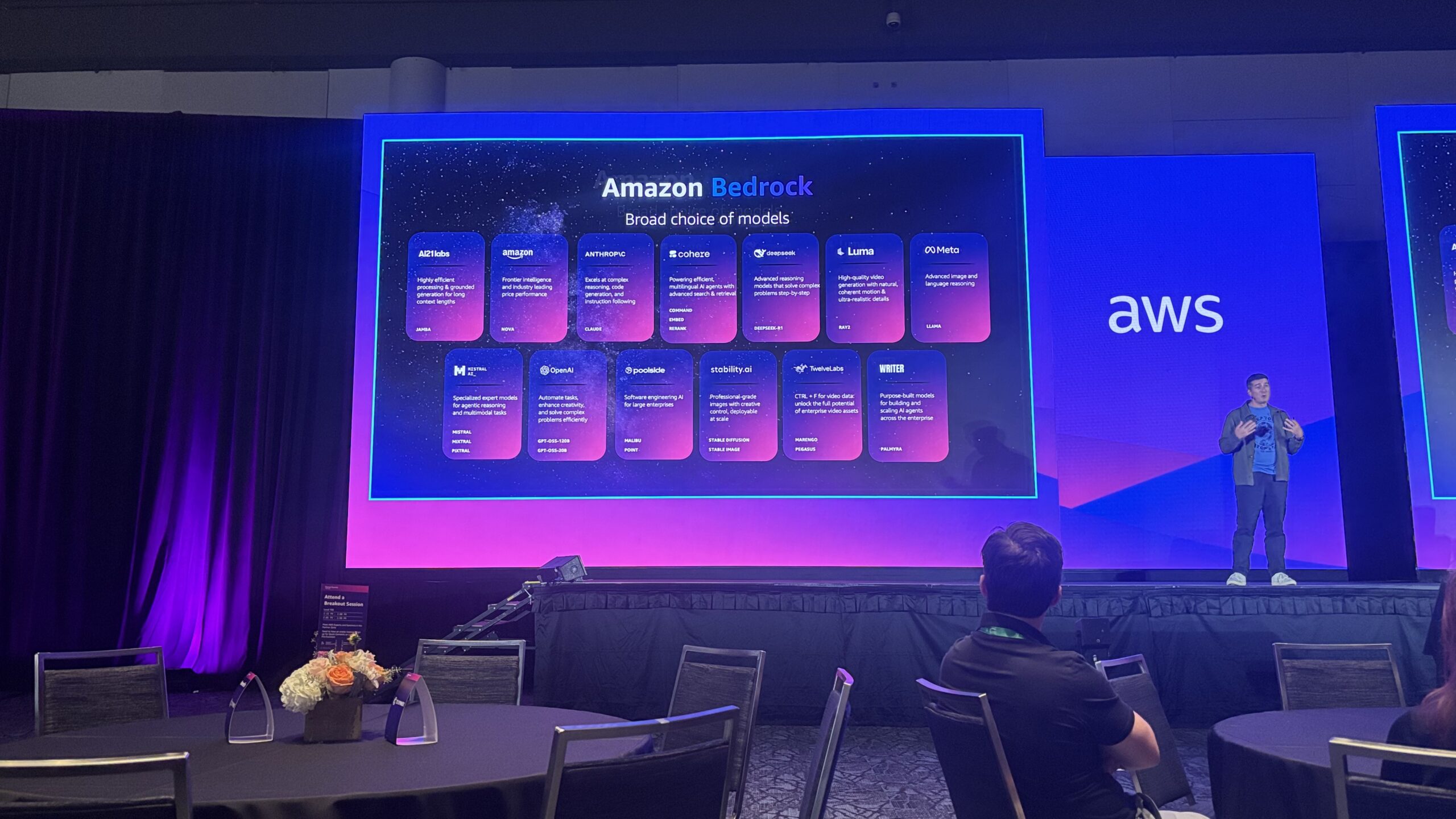
The biggest spotlight was on Agentic AI. AWS introduced a portfolio that connects tools like Amazon Q, AWS Transform, Amazon Connect, Nova models, and Bedrock, all tied together with new SDKs and services to build intelligent agents.

Key themes:

  • Flexibility with OSS and partner integrations
  • Customization guardrails to build responsibly
  • Vertical solutions for industries like SAP, Oracle, and mainframes
  • AWS Transform as the first agentic AI service for migration and modernization, with impressive results like faster documentation assessment and reduced licensing costs

Day 2 – Open Summit Themes

The second day zoomed out into the future of cloud. The evolution was clear:

  • From Generative AI assistantsGenerative AI agents → to Agentic AI systems
  • Less human oversight, more automation, and multi-agent systems capable of reasoning like humans

This shift toward agentic AI signals the next chapter in cloud — where workloads don’t just run in AWS, but make decisions, automate workflows, and adapt in real time.

Team Insights

What made this Summit even better was discussing takeaways with my HH Angus team:

Aaron St. Germain shared:

“The sessions on serverless development, real-time data analytics, and workload optimization gave us clear best practices for Lambdas and streaming data pipelines. We even had hands-on activities and games that made the learning fun!”


Paul Vandenberk highlighted:

“There’s a growing reliance on AI to handle the huge amounts of IoT data. A unified name space is critical for data purity, making sure analytics today and AI tomorrow actually deliver value.”


Veerpal Kaur mentioned:

“The keynote was inspiring, and the hands-on Lambda workshop gave me a deeper view of serverless. I also attended sessions on analytics and Agentic serverless chatbots — it felt like a glimpse into the future of intelligent applications.”


Gary Chang summarized:

“GenAI was everywhere. The key is learning how to integrate it with our existing datasets, especially in digital twin solutions for the AEC industry. We can borrow lessons from industries that are already ahead in AI maturity.”


Community and Connections

One of the most rewarding moments came at the end of the Summit: meeting leaders from the AWS community, reconnecting with peers from the AWS Community Builders program, and sharing a dinner where we talked about the next big thing we want to organize together.

Moments like these remind me that AWS isn’t just about technology. It’s about people, collaboration, and building a stronger community together.

The AWS Summit Toronto 2025 showed us where cloud is heading: faster, smarter, and more agentic than ever before.

I’d love to hear from others who attended: What were your top takeaways?
And if you couldn’t make it this year, follow me on LinkedIn for more AWS, DevOps, and Terraform reflections — I’ll keep sharing the lessons and the community spirit!


Augusto Valdivia

AWS DevOps Specialist
Digital Services