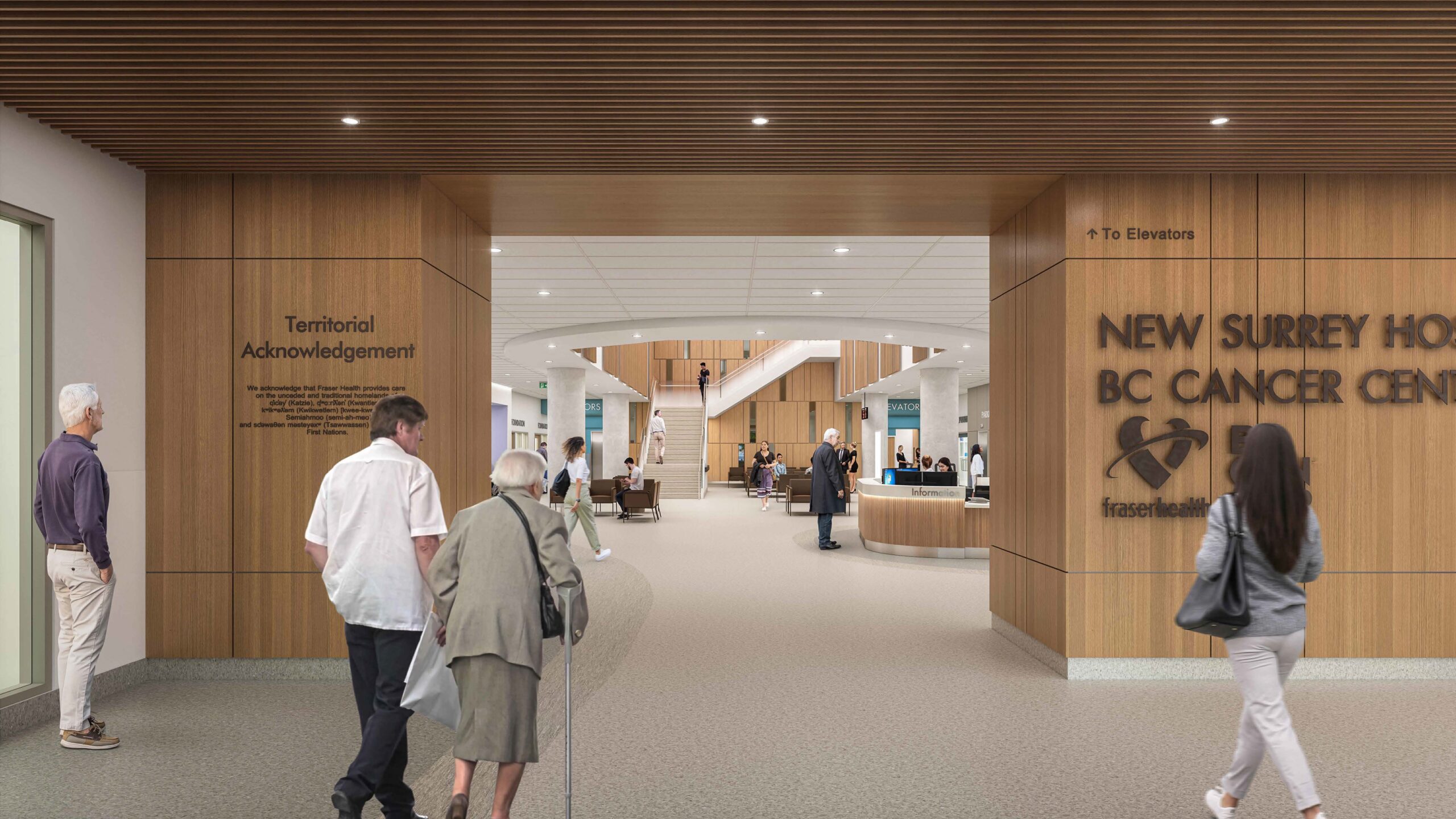
Angus Connect's ICAT/IMIT team is helping lead the charge in designing one of British Columbia's first 'smart hospital' facilities - the new Surrey hospital and BC Cancer Centre (NSHBCCC).
Currently in design, the Fraser Health Authority’s next-generation healthcare facility represents a pivotal step toward fully connected, digitally enabled care environments in Canada.
Shaping the Smart Hospital Vision
Our approach integrates digital strategy, data-driven decision support, and clinical readiness from day one. Incorporating principles from the new CSA Z8005:24 – Special Requirements for Digital Infrastructure and Digital Health Care Technologies, the project team is embedding best practices in interoperability through systems integration design, extensive stakeholder engagement, and future-proof planning to ensure that digital systems enhance, rather than complicate, care delivery.
This facility will leverage technology not as an overlay but as an integrated layer of care — connecting patients, staff, and the building itself to improve safety, efficiency, and experience.
Technology Highlights
- Infrastructure for Automated Guided Vehicles (AGVs): Planned integration of autonomous vehicles to move multiple material streams across the hospital, improving logistics efficiency and staff safety.
- Wearable Bio-Tracking Devices: Continuous patient monitoring before and after procedures will enable faster clinical intervention and better outcomes.
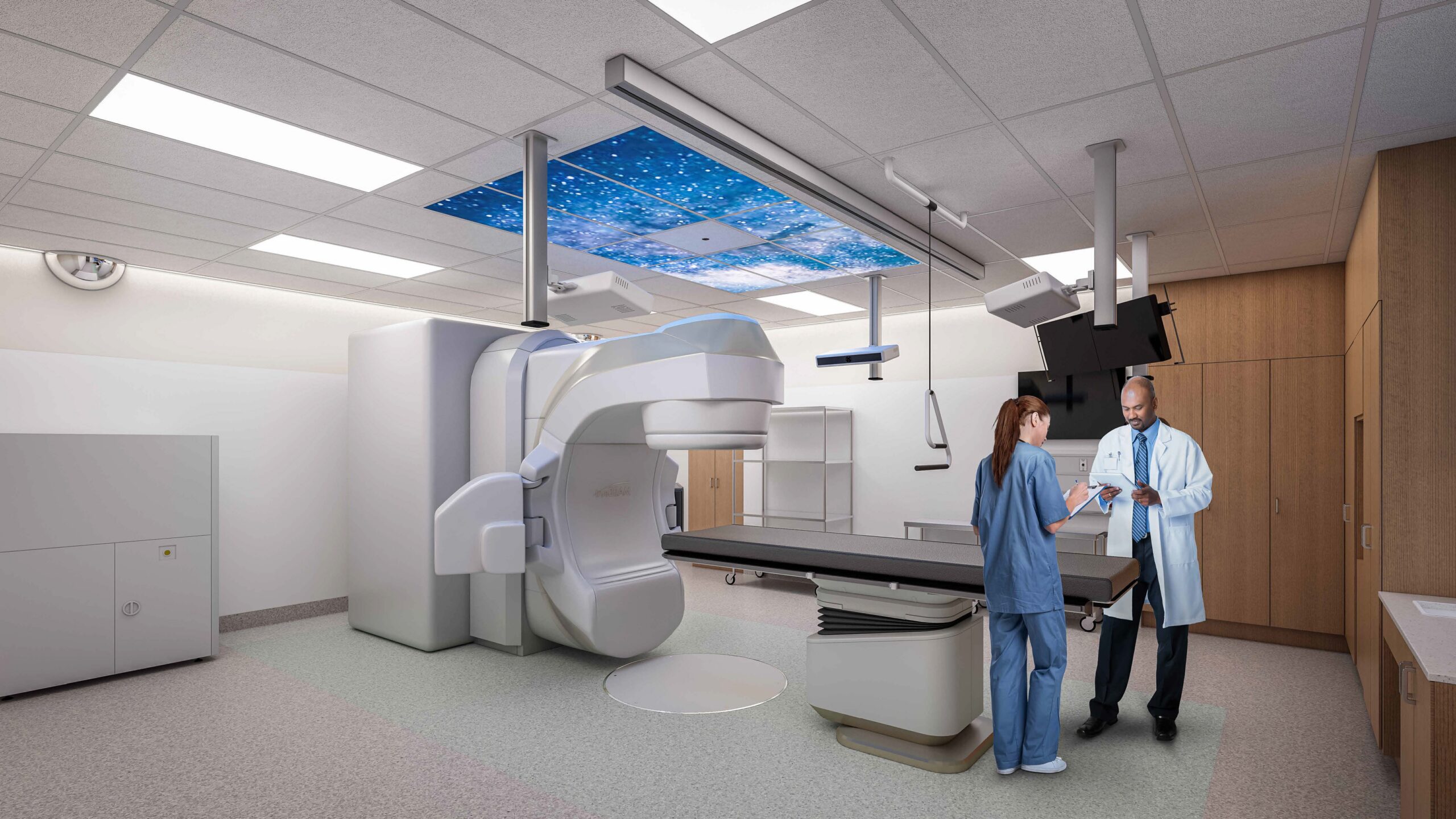
- Smart Operating Rooms: Featuring digital integration, disinfection lighting, multi-angle clinical cameras, and real-time remote collaboration for advanced training and tele-surgical support.
- Telemedicine for Surgery and Trauma: Virtual surgical consults and remote specialist access will expand capacity and ensure timely intervention in critical situations.
- Real-Time Location Tracking: Ultra-wideband (UWB) asset and staff tracking within one-metre accuracy will enhance workflow optimization and safety.
A Response to Today’s Healthcare Challenges
As Canadian patients face long wait times — averaging 28.6 weeks between referral and treatment in 2025 [1] — the need for technology to extend access, enhance capacity, and personalize care has never been greater. While most Canadians still prefer in-person visits, many Canadians believe that virtual and digitally supported care can improve access to specialists and reduce delays [2].
The Fraser Health region—including Surrey Memorial Hospital, the largest acute-care site in the region with over 650 acute-care beds and the province’s busiest emergency department—continues to face immense pressure from rapid population growth, aging demographics, and limited inpatient capacity. The new Surrey hospital and BC Cancer Centre directly helps to address these pressures by creating a digitally inclusive, patient-centric model of care that enhances operational flow, improves visibility across the care continuum, and optimizes real-time use of available beds and resources.
Angus Connect Team Approach
Across the country, Angus Connect has built a reputation for bridging people, process, and technology to deliver operationally ready, data-driven environments. Our multidisciplinary team — including engineers, designers, BIM, clinicians, engineers, project managers, and change management— has guided more than a dozen of Canada’s largest healthcare capital projects. From integrating real-time patient flow systems to enabling digital command centres, our work demonstrates how thoughtful digital design translates directly into better patient outcomes and workforce resilience.
Looking Ahead
The new Surrey hospital and BC Cancer Centre will set a new benchmark for smart healthcare facilities in Canada — a fully electric, digitally equipped hospital where interoperability, automation, and human-centered design converge to transform care.
By embedding digital health planning into the foundation of capital design, Angus Connect is not only building infrastructure — we’re helping define the next generation of care delivery across Canada.
Authors:

Megan Angus, RN, MBA, Lean, EDAC, Principal
Senior Vice President, Strategy and Digital Services | Vice President, Angus Connect


Kyra McLellan, B.Eng., M.A.Sc., E.I.T
Senior Designer, Healthcare
References:
[1] [2] Moir, M., & Esmail, N. (2025). Waiting Your Turn: Wait Times for Health Care in Canada, 2025 Report. Fraser Institute. | Fraser Institute. https://www.fraserinstitute.org/studies/waiting-your-turn-wait-times-for-health-care-in-canada-2025
[3] Virtual care is real care: National poll shows Canadians are overwhelmingly satisfied with virtual health care. Canadian Medical Association. (2020, June 8). https://www.cma.ca/latest-stories/virtual-care-real-care-national-poll-shows-canadians-are-overwhelmingly-satisfied-virtual-health