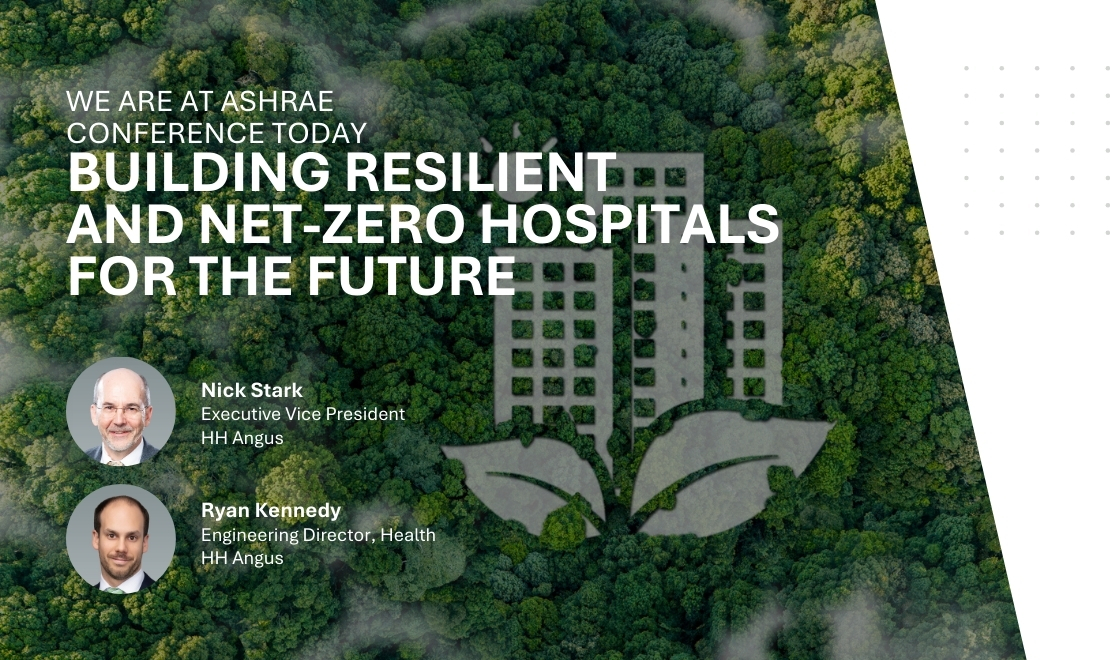
This week, Nick Stark and Ryan Kennedy are at the ASHRAE Conference in Chicago to share insights from one of Canada’s most ambitious healthcare projects.

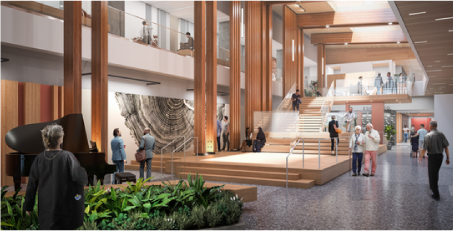
Their session, “Building Resilient and Net-Zero Hospitals for the Future: A Spotlight on the Cowichan District Hospital Replacement Project,” explores how this landmark facility is redefining what sustainable, resilient, and inclusive healthcare design looks like.

As Canada’s first hospital to be certified ‘Zero Carbon Building - Design Standard’ by the CaGBC — and British Columbia’s first fully electric hospital — Cowichan is setting a new national benchmark. Beyond energy performance, it embeds Indigenous representation, pandemic preparedness, and patient-centred design into every layer of planning.

Delivered through an alliance procurement model, the project proves what’s possible when collaboration and innovation align — blending engineering, architecture, and cultural insight to create a hospital ready for the future.

We’re proud to be part of this movement toward net-zero healthcare infrastructure and the engineering solutions that will make it real.


CELEBRATING SUSTAINABILITY

Climate
Impact
Report

2025

Why We’re Doing This

Our vision is to expand what is possible, together, for a better future.

“We’re working to build a better, more sustainable business from the inside. Our climate action isn’t just about carbon, it’s about reducing waste, improving efficiency, and creating long-term value for our people and operations.” Paul Keenan, President

This report underscores our commitment to controlling our broader climate emissions impact as we publish this data and work to reduce our carbon footprint as a company.

Our Target

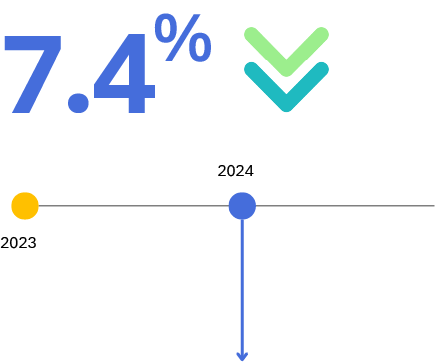
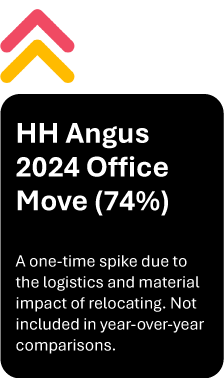
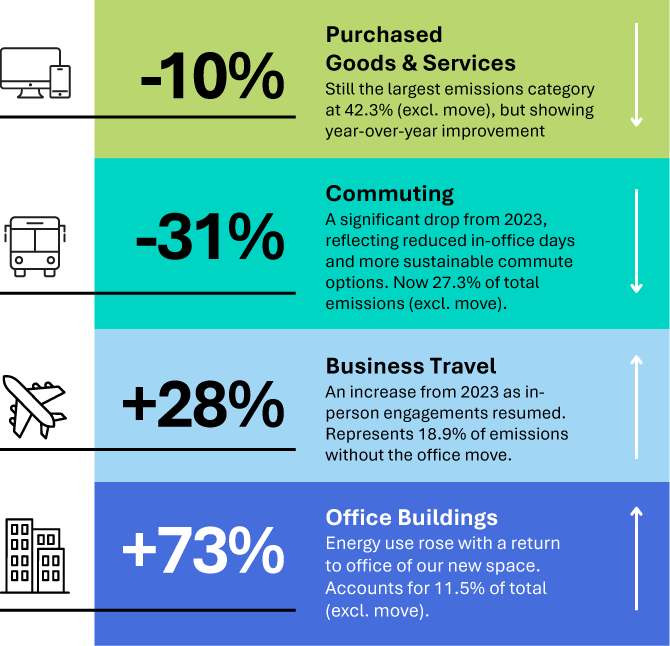
After calculating our 2023 emissions baseline, we set a target to reduce 2024 emissions by 5% per category per employee. We’re proud to report a 7.4% reduction was achieved.

How did we
do in 2024?

Here’s a breakdown of our
emissions by category:

HH Angus Corporate Initiatives

To achieve our goal, we considered a wide range of initiatives—some have been implemented, while others are still in progress.

Tracking Progress

Follow GHG Protocol¹ (WRI / WBCSD) for emissions tracking

Internal report: 2023 baseline completed

Public climate report: planned for 2025

¹ ghgprotocol.org

Donating Equipment

Retired computer equipment is donated to local charities and partners (implemented, active, and ongoing)

Smarter Buying
& Tech Use

Extend hardware lifespan and reduce shipments (planned /ongoing effort)

Smarter Business Travel

Preferred hotel list with lower emissions (planned)

Green Uber ridesharing policy (electric/hybrid vehicles) (planned)

Evaluate purchasing carbon offsets for flights (under review)

More Efficient Offices

Negotiate energy disclosures in office leases (planned)

Staff Social Events

Tree planting with Tree Canada

Park clean-up events in Toronto

Recycling, tree planting, and energy-saving events/ Vancouver

Litter clean-up in Montreal

Our Work

We’re proud to support our clients in delivering high-performance, sustainable buildings. Here are a few highlights of recent green achievements:

Cowichan
District Hospital

Certified as a Zero Carbon Building – Design Standard

The Co-operators
Head Office

Certified as a Zero Carbon Building – Design Standard

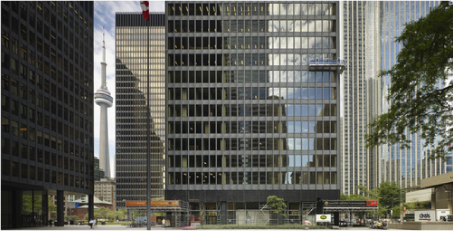
TD Centre
Toronto

The complex is LEED Gold certified overall, with at least one tower achieving LEED Platinum

For a copy of the complete Climate Report, please contact us.

“Azure’s International AZ Awards recognize excellence and innovation in architecture and design, and celebrate the world’s best projects, products and ideas.”

This international design competition annually selects winners in the categories of design, architecture, landscape architecture, urban design, experiential graphic design, interiors, concepts, student work and social good/environmental leadership. The 2022 awards saw Toronto’s Mirvish Village redevelopment project winning in the Urban Design Vision category. Click here to read more about the Mirvish Village AZ Award.

Award-winning Redevelopment

Mirvish Village is rising on the site of ‘Honest Ed’s,’ a much-loved discount store that was at the heart of Toronto’s Mirvish Village neighbourhood for almost 70 years. The redevelopment is currently under construction and spans 4.5 acres, creating nearly 1 million ft2 of purpose-built rental housing and retail space.

Mirvish Village has a focus on sustainability and affordability. To achieve this, the redevelopment is incorporating a district energy system and micro-grid that will offer a resilient means of thermal energy, power, and emergency power, enabling the project to meet LEED platinum and the City of Toronto’s Tier 2 Toronto Green Standard requirements. 

HH Angus’ Role

Our Energy Division team worked closely with Creative Energy Developments to provide mechanical and electrical engineering services for the Village’s central utility plant, which includes a combined heat and power plant (CHP), a boiler plant, and a cooling plant. The CHP plant includes an 800 KW generator set with auxiliaries and heat recovery system. The generator is expected to run continuously to provide power to the complex.

Heat recovery consists of two systems: high temperature to provide heat to buildings, and low temperature to provide additional heating for a winter snow melting system and swimming pool heating. The boiler plant includes four condensing hot water boilers, with the option for two additional boilers in future. All boilers have an output of 3.1 MW.

The cooling plant includes two water-cooled chillers, operating at 1200 tons each. One is a magnetic bearing chiller with variable frequency drive (VFD), and the other is a centrifugal chiller with VFD. As well, two rooftop cooling towers at 1200 tons each have been installed. 

Central distribution piping from the plant will provide hot water and chilled water to multiple energy transfer stations, with heating, cooling, and domestic hot water heat exchanges for each building within the complex.

A photo-voltaic solar system will have a capacity of 103KW, 480V. HH Angus provided direction for locating the installation, coordinated with the PV supplier for modeling the panel direction and angle for optimal PV output, developed technical connection requirements with Toronto Hydro, and identified requirements for parallel generation with the central utility plant. Our scope also included developing thermal and electrical metering strategies within a microgrid system, and design of operation for gas-fired emergency generators in electrical peak shaving mode.

Rendering courtesy of Westbank Corp


Mirvish Village - AZ Awards | AZ Awards (azuremagazine.com)

“By addressing occupant well-being, energy and greenhouse gas reductions and decarbonization targets, the AEC industry can bring existing buildings into the future.”

Akira Jones’ keynote address kicked off a recent panel discussion on Smart Buildings: Now and Tomorrow, from Canadian Consulting Engineers (CCE).

According to Akira, Director of Digital Services at HH Angus: “Understanding the intersection of technology and the built environment to deliver better business outcomes and performance will be instrumental for engineers, architects, contractors, integrators and other professionals in the architectural, engineering and construction (AEC) industry to be successful. This understanding presents a fantastic opportunity for owners to leverage technology to modernize their buildings and assets. By addressing occupant well-being, energy and greenhouse gas reductions and decarbonization targets, the AEC industry can bring existing buildings into the future.”

The CCE event provided attendees with a forum for information, knowledge and practical advice on making the buildings, facilities and structures they design more economical for owners and safer and more functional for occupants.

The panel spotlighted key aspects of creating and managing smart buildings in a variety of settings including office, institutional, mixed use, industrial and retail. The discussion focused on topics such as: Emissions, Energy Efficiency & Sustainability, IoT, Security, Life Safety and Buildings/Construction ROI when it comes to issues pertaining to utility/energy management, security and emergency response.

For a video of the keynote address, click here.

To see the full panel of speakers, click here.

Akira Jones, P.Eng., LEED AP
Akira is Director of HH Angus’ Digital Services team, which specializes in BIM processes and software, 3-D scanning and Scan-to-BIM, the Internet of Things (IoT), digital twinning and Amazon Web Services cloud consulting. He is also a Mechanical Engineer with well over a decade of experience in the AEC industry.

Heat Pumps Reducing your Building’s Reliance on Fossil Fuels

In Part 1 (https://hhangus.wpengine.com/heat-pumps-reducing-your-buildings-reliance-on-fossil-fuels/) of this series, we introduced the use of heat pumps for building heating and how they present an opportunity to mitigate the effects of climate change. In Part 2 (https://hhangus.wpengine.com/heat-pumps-reducing-your-buildings-reliance-on-fossil-fuels-part-two/) we discussed the cost implications to owners and operators, as well as considerations, opportunities and risks present for heat pump heating and how to navigate them. In this final installment, we review refrigerant options and additional considerations impacting a building owner or operator’s decision to implement heat pumps, along with a summary of key take-aways.

When it comes to selecting a heat pump, the refrigerant will play a role in determining the operating temperature of the heat pump. This is critical to older buildings that require high temperatures for heating due to poor thermal performance of the building envelopes. It is important to consider that synthetic refrigerants such as R134A and R1243Zde, which are commonly used in commercial heat pump applications, have some limitations on their maximum operating temperatures. In addition, some of them have higher Global Warming Potential (GWP) as well as higher refrigerant costs. See Table 1.

Table 1 Refrigerant Selection Criteria, adapted from Emerson

Natural refrigerants, such as Ammonia (R717) and CO2 (R744), can achieve higher operating temperatures and have minimal/no GWP in addition to relatively lower refrigerant costs. However, the capital cost for machines using Ammonia (R717) and CO2 (R744) is generally higher than that of synthetic refrigerants. This is because these refrigerants operate at much higher elevated pressures (up to 2000~3000 PSI for CO2). See Figure 7. Piston reciprocating and screw compressors can be used for these machines. This can sometimes result in additional noise suppression requirements for certain projects that use these types of compressors. Natural refrigerants are typically used for industrial application; however, they are making their way to small scale applications. It is worth noting in the case of using ammonia as a refrigerant that, based on the refrigerant charge, there may be additional challenges such as code requirements for room construction and emergency refrigerants leak detection and evacuation.

Figure 7 Comparison of simple refrigeration cycles Subcritical R134a refrigeration and Transcritical CO2 cycle (CIBSE Journal)

Commercial heat pumps can provide hot water for heating to a maximum temperature between approximately 60 and 70°C (140 to 160° F), while industrial heat pumps can operate at temperatures up to 95°C (203°F). These differences in temperature limitations would have some effect on the maximum COP that these types of heat pumps can achieve. Some system designs can combine two refrigeration cycles, each having separate and different refrigerants: one is synthetic while the other is natural, resulting in the best of both worlds of cost versus efficiency.

One final item to consider is the phase out schedules of refrigerants. While many of the commercial synthetic refrigerants currently on the market do not have set phase out dates, it is possible that such refrigerants would fall under regulatory scrutiny that may require them to be phased out or replaced in the next 10 to 15 years. Natural refrigerants do not face such risks.


Other Considerations

Whole-building Energy Modeling

There are several other considerations that play a role in utilizing heat pumps for building heating. One of their main operational advantages is that they can provide heating only, cooling only, or simultaneous heating and cooling. It is easy to quantify the energy costs for heating or cooling using a heat pump as a dollar value per unit of heating or cooling. However, as previously noted, it becomes harder to quantify the benefits of a heat pump in a simultaneous heating and cooling scenario. At the design stage, a data-driven energy model of the building systems can help owners evaluate the true benefit of using heat pumps, especially for simultaneous heating and cooling, and a wide variety of modeling tools is available to engineers in this field. These tools can use real building heating and cooling load data to quantify the savings and operational advantages that a heat pump can bring when providing buildings with both heating and cooling at the same time.

Building Envelope

While not typically considered in the same context, the thermal performance of the building envelope is an important system to analyze and study along with heat pump technologies. Certain heat pumps can have limitations regarding the maximum supply water temperature (SWT) they can achieve. At the same time, the thermal performance of the building envelope defines the need for higher or lower SWT. For instance, high performance building envelopes enable the use of lower temperature heating systems to maintain comfortable temperatures indoors, which expands the list of heat pump technology options that can be used. It is important to note that, as technology improves, heat pumps are able to operate at even lower ambient temperatures and to produce even higher supply water temperatures. Consequently, it is possible to find heat pump products for most climates and buildings. However, there are undeniable synergies between high performance envelopes and heat pumps to achieve overall high building energy and carbon performance and, as such, these two energy conservation measures should be bundled whenever possible.

Geoexchange Systems

Tying heat pump systems to geoexchange systems can help heat pumps provide heating to buildings during peak winter days with no performance deterioration when compared to air source heat pumps (ASHP). Geoexchange systems utilize the ground as an energy source during the winter and as a sink in the summer. When coupling such systems with a heat pump, the caveat is to be able to accurately balance the thermal energy of the system across the seasons to avoid depleting the thermal source in the ground. This concept can be analogous to using the ground as a thermal battery that operates seasonally. This thermal battery charges during the summer where the heat pump cools a building and rejects heat to the ground, and in the winter the thermal battery discharges by acting as a heat source that provides thermal energy to the heat pump. In general, Thermal Energy Storage (TES) systems apply to refrigeration systems including heat pumps and can help in peak load management for building thermal loads; taking this into consideration when implementing heat pumps can result in both operation and economic gains.

Domestic Hot Water

One final consideration is that heat pump systems can be utilized for domestic hot water heating applications. Such integration can be relatively easy to implement from a design standpoint and can often result in capital and operational cost savings on domestic hot water heating equipment.

Simultaneous Heating and Cooling

Heat pumps can provide heating and cooling at virtually any time of the year, which provides the ability to control space conditions independently from each other. This allows for some zones to be in cooling mode while other zones are in heating mode, leading to increased occupant control and comfort. This is particularly important during shoulder seasons where some zones might require cooling (e.g. south facing), while other might require heating (e.g. north facing). This is a benefit of heat pumps compared to systems like a conventional 2-pipe Fan Coil systems with a Chiller and Boiler plant, where a seasonal changeover must be performed, and limits all the fan coils in the system to be in either cooling or heating mode.

The Bottom Line

Heat pumps can meet increasing space cooling and heating demand in many regions around the world, including North America. Over the next few decades, energy consumption for space heating and cooling are expected to converge. See Figure 8. Heat pumps would emerge as a linking technology between building heating and cooling energy around the world.

Figure 8: Building Final Energy Consumption Space Heating and Cooling, 2020 to 2050

Heat pumps can be deployed in urban, suburban, and rural areas with new heat pump solutions that are emerging rapidly and being deployed on a larger scale. This trend is expected to continue over the next couple of decades. Higher efficiency heat pump machines are already being utilized across the board. However, there will be specific technologies and designs that are tailored to certain buildings or climate characteristics. Air source heat pumps can be successful in low carbon buildings in most climates, while ground-source heat pumps would work better in very cold climates or in buildings that have space restrictions, such as older buildings. Selecting the right technology for the right application remains critical to the success of heat pumps in terms of cost and emissions reductions.

For more information about heat pump technology or to speak with one of our energy specialists, contact us at lowcarbon@hhangus.com or contact one of the authors of this article below.

Mike Hasaballa, M.A.Sc, P.Eng.
Mike is a lead engineer and project manager in HH Angus’ Industrial/Energy team. His work focuses on the design of efficient high-performance heating and cooling systems, as well as low carbon energy systems and energy master planning. mike.hassaballa@hhangus.com

Francisco Contreras, M.A.Sc, P.Eng., LEED, AP BD+C, BEMP
Francisco is a manager and energy analyst in HH Angus’ Knowledge Management team. He is very experienced in high performance green building design, building simulations, and energy assessment. francisco.contreras@hhangus.com