
Sector: Energy Infrastructure
McMaster University
Trigeneration Plant
HH Angus was initially engaged to perform a Detailed Engineering Study to determine the viability of installing a natural gas-fired turbine for power and steam generation, and the use of absorption cooling to balance out steam production in the warmer months.
For a full year, we reviewed heating, cooling and electrical power loading at McMaster University. We also reviewed operating costs covering maintenance, operating and natural gas costs, and completed a sensitivity analysis of gas and power pricing variances. Capital and Operating budgets were also prepared to determine ROI on the proposed investment.
Following the Detailed Engineering Study, we were engaged to design the new trigeneration plant using a gas turbine (5.4 MW) coupled with an HRSG (Heat Recovery Steam Generator), natural gas compressor, absorption chiller (1000 tons) and centrifugal chiller (2500 tons). The plant was installed in the existing central utility plant room, and significant demolition of redundant equipment was undertaken to generate the space for this system upgrade.
There were a number of interesting challenges associated with the work:
- Selective demolition of two existing steam boilers, two existing incinerators and one 5,000 ton electric centrifugal chiller including isolation of services and asbestos abatement to not impact existing plant operations
- Fitting this large equipment into an area with significant space constraints
- Creating a path of ingress for the equipment from outside into the sub-grade basement level of the plant for installation during winter months where the weather would be unpredictable
- Minimizing the impact on daily operations within the plant during the demolition and construction phases.
- Integration and coordination with a switchgear replacement project running in parallel with the cogeneration project
- Targeting a completion date of October, 2017 to ensure the client would receive full IESO funding for the project
Some of our solutions included:
- Thorough surveys of existing equipment and services to ensure the equipment slated for demolition could be isolated from the operating plant with minimal to no service interruption
- Engaging with equipment suppliers at an early date to ensure required footprints were allocated
- Coordinating with the structural engineers to design a removable roof cap that could be installed prior to the existing roof being cut open to allow equipment installation
- On-going coordination with plant staff during the design phase to get buy-in of any modifications required to the existing plant
- Pre-tendering long lead item equipment to ensure on-site delivery dates would meet the construction schedule
By designing to eliminate potential interferences or issues with installation, we were able to meet the delivery targets and deliver a successful project.
SERVICES
Prime Consultant | Mechanical Engineering | Electrical Engineering
PROJECT FEATURES
Status: Completed 2017
LOCATION
Hamilton, Ontario
KEY SCOPE ELEMENTS
Year-long detailed engineering study | Reviewed heating, cooling and electrical power loading | Study included sensitive analysis of gas and power pricing variances | Introduced new design for trigeneration plant usage, a gas turbine (5.4MW) coupled with an HRSG, natural gas compressor, absorbtion chiller and centrifugal chiller
Gas Drive
Slave Lake Pulp 9 MWe Cogeneration Project
Waste-activated sludge is produced in vast amounts at pulp mills, and is generally sent to be incinerated or landfilled, or can be land applied. Any of these options represented a lost opportunity at the Slave Lake Pulp plant in Alberta. The sludge would instead be repurposed to serve as the main ingredient for anaerobic digestion—a reliable, local, ongoing source of renewable energy.
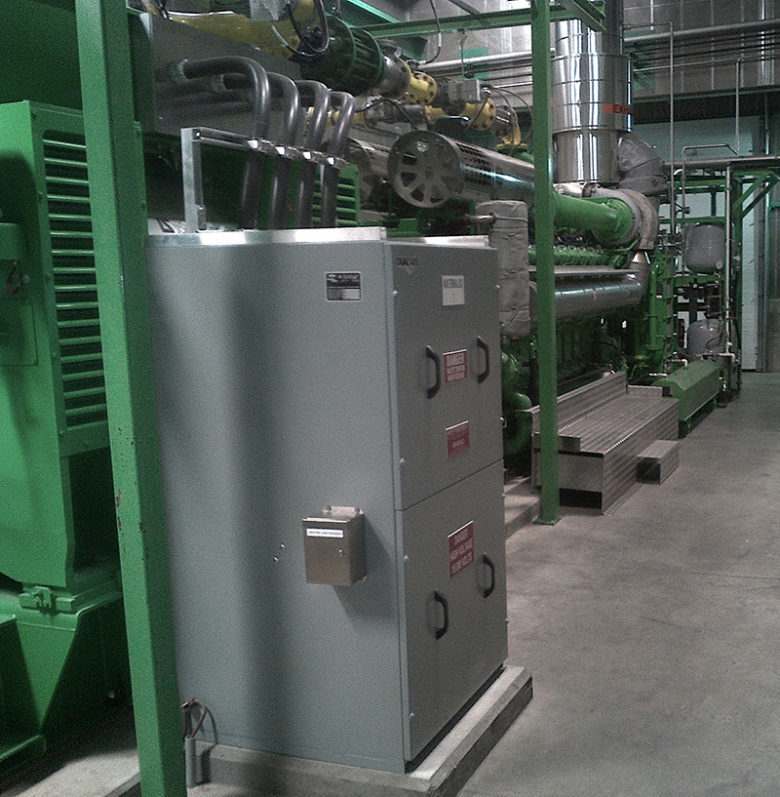
HH Angus designed a 3 X 3 MWe bio-gas fed cogeneration plant for Slave Lake Pulp, a division of West Fraser Mills. The renewable energy technology integrates energy-efficient anaerobic digestion, using the pulp sludge, into the plant’s existing wastewater treatment system. This allows the plant to generate a methane-rich biogas that produces electricity and heat for the pulping process.
Our scope included: engineering electrical power equipment to integrate from the owner’s 13.8kV switchboard into the electrical generation system distribution to connect the cogeneration equipment; electrical design for a new engineered building housing the cogeneration machines and balance of plant; affiliated balance of plant engine electrical support services, such as high and low temperature cooling, exhaust gas heat exchanger and fresh/waste oil, glycol makeup systems, etc.
HH Angus prepared a 13.8kV single line diagram for the electrical system, from the power generation modules through the switchboards, to the interface to the utility service and existing owner’s distribution system; plus preparation of a 600V & 120/208V single line diagram for the generator, building auxiliary and balance of plant services. We also designed protection and control systems, and connection arrangements including SCADA with AESO.
SERVICES
Electrical Engineering | Commissioning support
PROJECT FEATURES
Status: Completed 2015
LOCATION
West Fraser Mills, Alberta
KEY SCOPE ELEMENTS
Designed a 3 X 3 MWe bio-gas fed cogeneration plant | Detailed design of power equipment to integrate to utility and owner’s existing plant | Initiated protection and control system designs Including connection arrangements - SCADA with AESO
Proven protection
We provided a detailed short circuit analysis and co-ordination protection setting study to satisfy the owner that their system is fully protected.
Energy win-win
“This system will now allow us to actually take advantage of some of this lost energy, while also reducing our consumption.”*
Rod Albers, Manager of Energy ad Bio-Product Development, West Fraser Mills
Thunder Bay Regional Health Sciences Centre
Cogeneration Plant
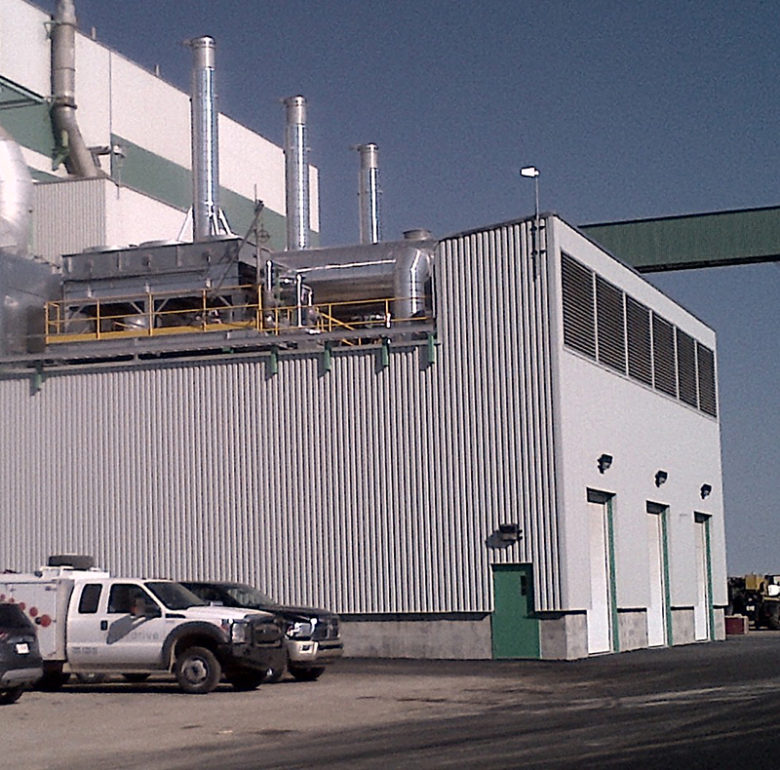
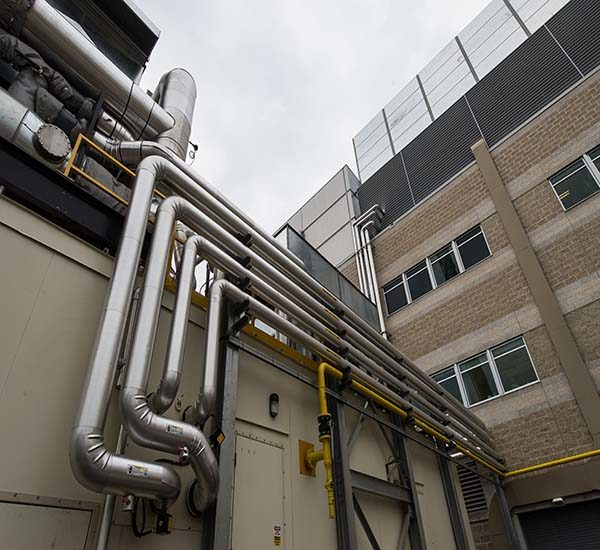
The Thunder Bay Regional Health Sciences Centre required a new outdoor enclosed cogeneration machine to be integrated into the existing mechanical and electrical hospital systems to displace utility electricity and boiler production.
As prime consultant, some of the challenges we overcame on this project included: meeting the delivery deadline under a very tight schedule once the project was approved to proceed; working under the confines of space constraints; noise suppression requirements associated with working in an operating healthcare facility; and integration and use of low temperature water from cogeneration.
To address these challenges, HH Angus pre-tendered the equipment, which allowed for unit production while mechanical and electrical design continued. To address the issue of noise infiltration to the hospital, the unit noise suppression was specified to very strict levels, and these were successfully met.
Although low temperature heat is normally unused in this process and is displaced to the atmosphere, our design incorporated low temperature heat along with high temperature waste heat for use in the dearator make-up. This feature adds a level of long-term efficiency to the installation.
SERVICES
Prime Consultant | Mechanical Engineering | Electrical Engineering | Civil Engineering | Structural Engineering
PROJECT FEATURES
Size: 1.5 MW | Status: Completed 2015
LOCATION
Thunder Bay, Ontario
KEY SCOPE ELEMENTS
Integration of new outdoor cogeneration plant into existing hospital M&E systems | Aggressive delivery schedule | Mitigation of noise and space constraints
Meeting deadlines
Despite a very tight schedule, the project was completed on time and within budget.
Yukon Energy
Gas Drive Cogeneration Plant
Yukon Energy is a publicly-owned electrical utility that operates as a business at arm’s length from the Yukon government. It is the main generator and transmitter of electrical energy in Yukon and works with Yukon Development Corporation to provide Yukoners with electricity and related energy services.
There are almost 15,000 electricity consumers in the Yukon Territory. Yukon Energy directly serves about 1,700 of these customers, most of whom are in the communities of Dawson City, Mayo and Faro.
Included in our electrical scope for Yukon Energy’s new cogeneration plant:
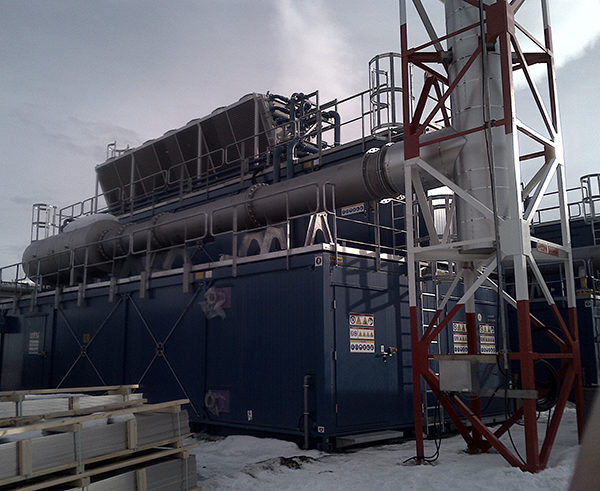
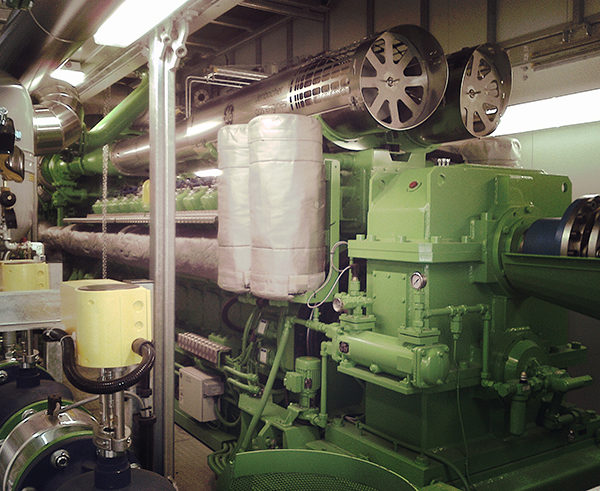
- Design of a two X 4.4 MWe Jenbacher 4160V LNG (liquid natural gas)-fed modular, containerized generation facility
- Supply of affiliated electrical power equipment (interface power transformer & switchgear, including electrical protection and control) to integrate from the owner’s existing transformer T4 6900V secondary into the electrical generation system distribution to connect the generation equipment
- Supply of station service transformer and distribution equipment to power all auxiliary equipment (jacket water pumps, dry cooler, battery chargers, module lighting, etc).
The Yukon Energy interface included a utility interface panel for complete utility interconnection to local standards. We provided interface wiring design for protection (ie. transfer trip) and SCADA, as well as outlining the electrical design for the switchgear container. Additional design included the balance of the plant engine electrical support services (HT & LT cooling, exhaust gas heat exchanger and fresh/waste oil and glycol makeup systems), etc. These services are supplied by a separate 600V service provided by the owner.
SERVICES
Electrical Engineering
PROJECT FEATURES
Status: Completed 2015
LOCATION
Yukon, Canada
KEY SCOPE ELEMENTS
Design of 2 X 4.4 MWe Jenbacher 4160 LNG-fed containerized generation facility | Utility panel, interface wire design for protection and SCADA | Outlined electrical design for switchgear container | Designed plant engine electrical support services | Balance of plant engine electrical support services
Temporal Power
Flywheel Energy Storage
“With thorough project management and smart engineering by the Angus team, they have been able to condense the schedule and, at the same time, lower our costs.”
— Geoff Osborne, Senior Associate, NRStor
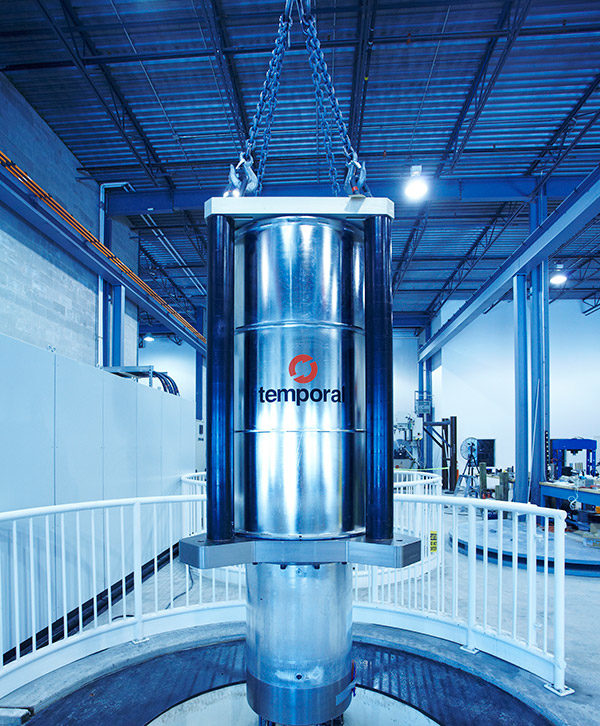
HH Angus and Associates was engaged to provide the detailed electrical engineering and construction management of this flywheel energy storage project at Temporal Power’s Minto facility near Harriston, ON. Flywheel-based energy storage systems do not use fossil fuel and do not produce CO2 or other harmful emissions during operation.
Our electrical team provided consulting engineering to connect Temporal Power’s nominally 2MW of flywheel energy to (and from) the grid at distribution voltage, as well as commissioning of the site.
Grid frequency regulation is required by the IESO in the area northwest of Guelph because of fluctuating electrical load and generation; 2 MW of flywheel capacity can act as a sink or a source of electricity to stabilize frequency.
The vulnerability of the electrical grid and distribution service, as evidenced in the December 2013 ice storm that affected predominantly Ontario, Quebec and the Northeast US, is giving impetus to the move to smart grids, distributed power and storage systems. The Temporal Power facility serves to balance the system frequency, thereby reducing the need to have a more expensive and less responsive generating plant performing that function.
Each of the ten 250 KW flywheels in the plant weighs about 4000 kilos and spins at up to 11,000 RPM.The flywheels operate through five 480V inverters (ie, two flywheels per inverter, with one redundant unit). HH Angus designed and supplied the system that converts the local grid distribution voltage of 44,000V through 347/600V to 480V (and vice versa). In terms of interconnecting to the grid, this is very much like a generator project in that it does ‘generate’ 2MW when requested as frequency is decreasing. But it can also absorb energy when the grid frequency is ‘speeding up’.
SERVICES
Electrical Engineering | Site Commissioning
PROJECT FEATURES
Status: Completed 2014
LOCATION
Harriston, Ontario
KEY SCOPE ELEMENTS
Detailed electrical engineering and construction management of flywheel energy storage project | 2 MW of flywheel energy to/from the grid | EPC through Angus Power | Flywheel technology balances system frequency 10 X 250kW flywheels
Engineer
Procure
Construct
This was a substantial EPC project that married the electrical engineering capacity of HH Angus’ grid connection specialists with the project and risk management experience of our Angus Power team.